



The campaign portion of Gears of War: E-Day appears to be fairly divisive amongst critics. Fellow reviewer Adam posted his impressions on the E-Day campaign, and the result is a safe campaign that goes through the expected story beats without introducing anything new or compelling beyond the solid gunplay. The campaign is just part of the whole game, and for some people, it is something that they never touch beyond the tutorial to re-learn the controls. For them, multiplayer is the most important part, and we finally got a chance to take a look at that once the online servers were finally activated.
Multiplayer is split into three segments, all of which are available from the main menu rather than from an overarching multiplayer section of said menu. Campaign co-op is the first option, which works alongside the single-player and local split-screen co-op versions, as they all use the same save file. Online co-op can be played with up to four players and is cross-play compatible, but that only means being able to play with others on the PC and Xbox systems. While we didn't play through the whole campaign this way, we did try out a few missions with those who bought the special edition of the game, and the online performance was stellar across the board. No hitching or warping was present. It is a pricey way to play the game's campaign, but it is also the most optimal, since one won't have to deal with malfunctioning AI that doesn't follow the squad or misses all of their shots.
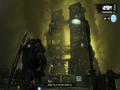
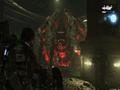
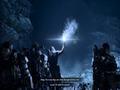
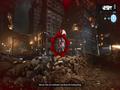
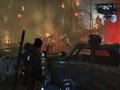
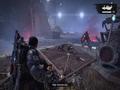
Versus is the second multiplayer mode that follows the series' traditional 4v4 format across four different match types. Team Deathmatch is self-explanatory, but it's more of a Battlefield type of system, where you win by depleting the other team's lives. Conquest is essentially King of the Hill, but the zones only move when one team has spent enough time in the place to score a point. Demolition is essentially the main Terrorists vs. Counter-Terrorist mode from Counter-Strike, but except both teams are vying for one bomb. You plant the bomb at a site, and it can be diffused, giving the other team the bomb and a chance to plant it at one of three sites. Victory is achieved when one team accumulates a total of 60 seconds of time with the bomb planted. Finally, there's Crucible, which takes the Demolition concept but replaces the bomb with a power core. That power core needs to be held in a scoring zone that moves and shrinks over time, and the round is won when the required time threshold is reached. What makes the mode interesting is that you can accumulate a charge with the power core and unleash it in one shot to instantly kill anyone near you, but the charge time is long enough that you can't count on it as a one-hit kill for an entire squad.
At the moment, only casual multiplayer is available; ranked play will likely be activated when the game officially releases to players who didn't pre-order a special edition. This means you may occasionally be matched against teams with players ranked much higher than you, but casual play also gives you the option to play entirely against bots while still having real players on your team. You can choose the bots' difficulty, but even on the lowest setting, don't expect to steamroll the enemy team without putting up a fight. This is a good way to get some of the thrills of PvP without being stomped by players who have already put much more time into the game than you have.
The modes are good, but your opinion about Versus multiplayer will depend on two things. The first has to do with the controls. Giving characters a dedicated jump button creates a weird disconnect, as this is the first game with that ability available, but it's supposed to be a prequel to the series. Playing the other games in the series will feel weird if you get accustomed to leaping. Having the run button also move over to the LS button may feel normal for any other shooter, but those two things create a small issue for longtime Gears of War players. More than a decade of muscle memory on a controller means using the A button to do a roadie run, attach to a piece of cover, and mantle over said cover. The move to multiple buttons means less of a chance of accidentally performing a move, but it also means that you'll be slower at doing your usual tactics as you relearn how to do things. It'll be irksome to those expecting the transition to this iteration to be as smooth as it was for the previous titles.
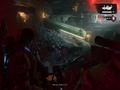
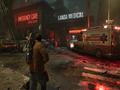
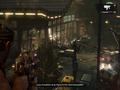
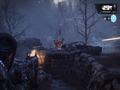
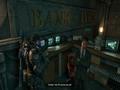
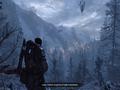
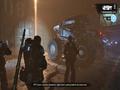
The second thing that will determine your enjoyment of Versus is how you feel about the adversarial multiplayer as a whole. Since the first game, one of the more surefire winning strategies involved the Gnasher shotgun. Run up to an enemy, fire the Gnasher at close range, and you'd guarantee a kill. Despite having access to the other weapons both on the battlefield and in their loadouts, players considered the Gnasher so powerful that matches often devolved into close-range fights where only those completely new to the game bothered to use anything else. That is still the case, as just about every Versus match of any type devolved into Gnasher fests where you only used that gun and were completely dead if you tried anything else. The mode remains fun, especially since so few games try to do the more traditional modes, but you'll quickly bounce from it if you hated the pure shotgun fights of the past.
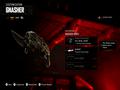
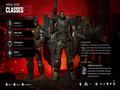
Horde Siege is the last of the three multiplayer modes, and it is perhaps the most ambitious and interesting of the bunch. You're still playing in four-person squads, but you can assign yourself to a class, with each class differentiating itself via its tools. Marksmen uncover enemies with their scanning drone. Breachers carry adrenaline boosts to recover health while temporarily reducing damage. Medics can use a beacon to heal or revive those within its range, while Assault uses sonic scanners to stun incoming enemies. There are no other class-specific traits, so anyone can revive downed players or bring back the dead, even without a Medic. This is a lighter implementation of a class system compared to other games. Similar to the Campaign mode, you can modify your weapons and armor with attachments. Unlike the Campaign mode, this is done by leveling up your profile, where you'll either unlock the attachments or the currency needed to unlock the augments. It is very much a Call of Duty vibe, which is fine since the augments never make their way over to the PvP mode.
Horde Siege contains three game types, not counting Onboarding, which is meant to be a quick tutorial on what to expect from the mode. Horde mode is more traditional, as you get a map and need to fend off up to 10 waves of increasingly difficult Locust. You'll get breaks in between each wave to resupply your ammo and set up defenses, but you'll be set up in one spot from beginning to end.

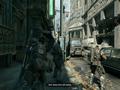
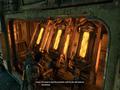
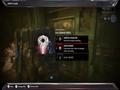
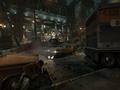
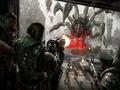
Blitz and Siege differ in terms of estimated play time; a Blitz game can last around 20 minutes, while a Siege game can last around 40 minutes, but both follow the same basic concept. Your squad is dropped into a large, semi-open level alongside two other squads, with each squad starting in a different area of the map. You'll have a series of objectives to complete before making your way to an extraction point. Objectives can vary from defending an area against several waves of enemies to hunting down a specific boss or retrieving certain items, and they're randomized from one match to the next. You can also encounter optional secondary objectives that offer additional rewards, such as perks and other upgrades for your squad. As your squad grows stronger and completes more objectives, the battlefield can also become more dangerous, with enemy modifiers and major events introducing new threats to keep the Locust from becoming overwhelmed.
The new Horde Siege concept allows for infinite replayability due to its random objectives and the fact that you're essentially playing through a Campaign chapter, minus the cut scenes and other story beats. What really makes this mode special is the inclusion of the two other squads. First, this is purely a PvE mode, so there's no chance that you'll run into a squad that will wipe you out while you're busy with a mission. Every squad has its own missions, and you can help others on their missions and earn accolades and bonuses without messing things up for them. They can also do the same for you, including reviving you if you fall, creating the feeling that this is all one big war that everyone is fighting, perfectly capturing the spirit of E-Day within the universe.
The best thing is the fact that every squad enters the game at completely different times. You'll jump in as another squad may be extracting, and another one might be in the middle of its own set of missions. This creates situations where a squad might leave behind some energy for whomever passes by, so they can be properly armed for the next big encounter. Turrets and other spare weapons may also be left behind, and you may altruistically leave behind bonuses of your own so others can benefit from your work. The combination of staggered release times and semi-persistence of goods creates the feeling that each instance is persistent, which further emphasizes how each run will differ based on random objectives and others' past actions — even as the same streets get flooded with Locusts and gunfire and emergence holes. All of this gives you more than enough reason to return, since the action almost writes itself at this point.
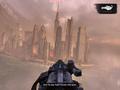
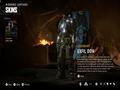
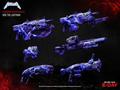
Regarding the cosmetics, E-Day straddles the line between the old- and new-school ways of thinking. The game promises no battle passes, and that seems to hold true, since we were never shown an option to purchase one. Seasons are still present, but the promise is that you won't miss its offerings, as those items will eventually get rotated into other challenges. A store is present for those who want to purchase some cosmetics, but just about everything else of note, from gun augments to other cosmetics, can be earned by simply playing and completing the daily and weekly challenges. It feels novel (in a good way) to see this at a time when most big games still ask for loads of microtransactions.
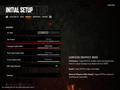
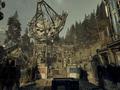
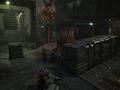
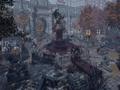
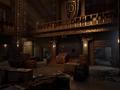
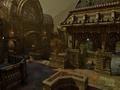
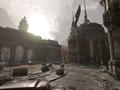
Graphically, the PC version of the game looks very nice if you have the hardware for it. The character models and their animations look just as good as before, but the environments are where things really improved. The ray tracing does a good job of accentuating all of the details, and things look great despite the fact that we still get the browns and grays that were prevalent during this series' debut. The upgrade to Unreal Engine 5 and the use of all of the technology means that you'll need to use upscaling and still need to play with the settings if you're trying to achieve a solid high frame rate. With a system running the latest version of Windows, a RTX 5090, 32GB of DDR5 RAM, and a Ryzen 9800X3D, the game hits 60fps at 4K with ultra settings at a native resolution. Going to the highest settings means dealing with barely 30fps at native 4K, but the differences in picture quality are so minimal that the sacrifice isn't worth it. Also, it is worth noting that the game does some shader compilation at first boot, but it took around 13 minutes on average to get that finished, so prepare to wait before you can change your settings.
As far as sound goes, it is as strong as it was in all of the prior games. The music remains haunting despite the constant action, as the horror elements take a bigger stage. The voice work is also excellent, with strong performances by major and minor characters alike. The sound effects are where things really shine, as every shot and explosion come through with more than enough oomph to feel impactful. It is a solid soundscape on regular speakers, and it's a treat to hear on a good sound system.
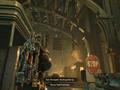

The Steam store's description mentions the Steam Deck by name, so it would make sense that the game should be playable on Linux machines. The game runs fine on Linux machines using Proton Experimental; the experience is stable and there's no issues with playing online. However, actual play on the Steam Deck is a dicey proposition at the moment. The game defaults to everything on low presets with TSR set to a dynamic resolution and a target of 30fps. The target frame rate is hit even if it means halving the resolution, but the game seems unstable. The benchmark couldn't be completed after a few runs on the device, so you may need to wait for a patch or two before the game achieves stability on the Steam Deck.
As a complete package, Gears of War: E-Day is very good. The campaign may not be all that exciting, but it works fine and is elevated by the solid gunplay, especially if you play with real people rather than AI teammates. The adversarial multiplayer is fine if you can adapt to sticking with the one accepted play style. It is the PvE that really breathes life into the game and makes it a solid multiplier contender for a good while. While the game can be brutal for newcomers, it fits fan expectations well enough that they'd be happy to see this title in their libraries.
Score: 8.0/10



More articles about Gears of War: E-Day