

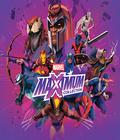





Games based on Marvel comics have been around since home consoles began, with Spider-Man being the first to do the honors back on the Atari 2600. Since then, various characters from the company have appeared in just about any and every device that is capable of playing a video game. The rights needed from various publishers past and present make it a Herculean task to make a complete compilation of Marvel titles. Even getting the Marvel vs. Capcom Fighting Collection in 2024 was something of a miracle. Marvel Maximum Collection from Limited Run Games is an even bigger miracle, as it is composed of various titles from three different publishers, and the results are good even if the quality of the titles varies wildly.
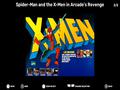
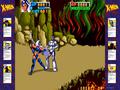
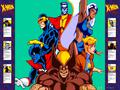
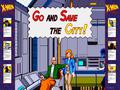
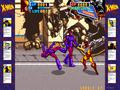
The compilation is comprised of six titles, but the marque title is the arcade version of X-Men from Konami. Coming hot on the heels of its other big, licensed hits such as Teenage Mutant Ninja Turtles and The Simpsons, this is another beat-'em-up that feels slightly dated for the time, as it isn't based on the 1992 cartoon airing on Fox Kids but the failed 1989 TV pilot subtitled "Pryde of the X-Men." That means the characters are all sporting their old costumes, and you have Dazzler as a playable character rather than another more recognizable mutant. None of that really mattered, since the beat-'em-up gameplay was solid all around, even if it adhered to the old-school arcade philosophy of enemies being cheap. Aside from the license, the big draw for the game was the six-player multiplayer, making this a large cabinet that necessitated the use of multiple monitors stitched together — like the arcade version of Darius — to fit the action.
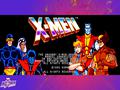
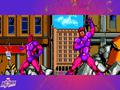



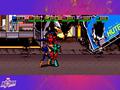
There are multiple versions of the game that aren't split up by region but max number of players available for each cabinet. Don't expect many visible differences for regions aside from subtitles, but the max player number plays a part in the screen ratio. It also determines the starting point in a level and how many enemies can appear on-screen at a time, so there are actual gameplay reasons why someone playing with fewer than the maximum number of people would choose one version over another.
X-Men is the only game in the collection to feature online multiplayer, which is an absolute shame since there are multiple games that make multiplayer a feature component of their title. With that said, the online component is done very well, as you can easily determine which version you're playing in terms of region and max multiplayer count. The game has cross-play, and we reviewed the online portion by playing co-op with the Steam version and the Xbox Series X version without any hiccups. The rollback netcode also works splendidly, as there was no strange warping or eaten inputs when doing a co-op playthrough of the game from beginning to end. There were moments when the game paused for a second or two before things went back to normal. Disconnects by the host are handled gracefully, as the game resets the level and gives host duties to someone else, but there is no way to get back into a game that's already in progress.
PC players have a few perks with this game over those on other consoles. For starters, ultrawide support is available on the PC. You will need to set up the game for your resolution and take the game to full screen mode for the screen ratio, but the game looks gorgeous this way. The second is the availability of six players for local multiplayer. That shouldn't come as too much of a surprise, since we've seen other PC games handle up to eight controllers at a time, but when all of the press material emphasizes six-player X-Men online play, it is nice to get the confirmation that local six-player play hasn't been left out.
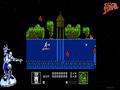
The next game on the list serves the opposite end of the spectrum as far as nostalgia goes. The NES version of Silver Surfer from Throwback, the outfit that acquired Acclaim's back catalog, is a combination horizontal/vertical shooter where you play the titular role in a quest to retrieve the six pieces of a deadly weapon from the Magik realm. The shooting is pretty straightforward, as you can strengthen your shots, pick up orbs to give you an extra means of firing, and use screen-clearing smart bombs.
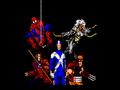
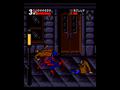

It's a good idea to make Silver Surfer a shoot-'em-up, but the game's infamous status comes from how wildly difficult it is based on some design decisions. There are parts of the environment that you can't travel through; that would be fine, but there are moments when you can't exactly tell whether you can travel through something without shooting at it first. Your hitbox includes your long surfboard, making you a very large target. No matter what, everything can kill you in one hit. Instead of respawning in place, you are sent back to the beginning of the stage, no matter how much progress you've made before your demise.
All of these things work very well to make players hate the game, but Limited Run has done one thing to make all of the non-arcade games more enjoyable: cheats. There's a toggle in the game selection screen to turn on some basic cheats like unlimited lives and health, and while that makes things easier for most titles, it works wonders for Silver Surfer. With no reason to worry about colliding with the environment and one-hit kills from enemies, the game becomes vastly enjoyable to the point where you'll find the graphics to be decent and the soundtrack to be something of a hidden gem in the overall NES lineup. In short, the cheats transform the title from terrible to decent enough, so most players should give it a run.
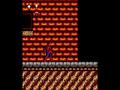
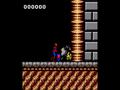
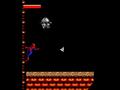
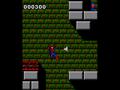
The rest of the Throwback contributions to the compilation vary greatly in quality. Spider-Man and X-Men in Arcade's Revenge is a game that people may remember — for all the wrong reasons. That starts with the first level, which gives a bad first impression. Your goal is to find all of the level's key pieces as Spider-Man, so you can enter Arcade's lair and save the X-Men. Unfortunately, you have to find the pieces in a specific order using Spider-Man's poor web-swinging abilities that barely get you any height or distance or his wall-crawling ability that feels cumbersome to use. His web shooting ability is limited to the horizontal axis, which makes fighting airborne enemies a pain. The game doesn't get any better once you reach the X-Men, as their abilities and levels make the game punishing. Cyclops seems mostly fine except that he can't shoot straight up. Storm is stuck in underwater levels, where everything explodes. Gambit has a limited number of cards to throw, and they travel only a short distance. Only Wolverine seems to be remotely playable, but you are stuck in what looks like a giant toy-themed world. Aside from the novelty of having Spider-Man team up with the X-Men, there are no redeeming qualities to the game.


All four versions of the game are featured in this collection, but they all come with the same content and play the same way. The SNES version has better colors and sounds, while the Genesis version plays a tad faster. The Game Gear version shows off what a potential NES or Master System version would've looked like, while the Game Boy version commits the sin of having larger characters at the expense of environmental visibility. For the sake of preservation, it is nice to see all four versions present, but that's faint praise for a title like this.
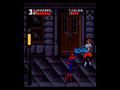
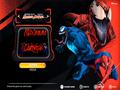
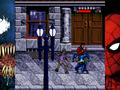
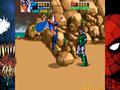
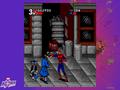
Spider-Man and Venom: Maximum Carnage was one of many console-only superhero games that went for the popular beat-'em-up genre that arcade superhero titles seemed to stick with. It's also one of the few that tried to match a specific comic book storyline rather than use an original story or mash together parts of other stories into one tale. This title dealt with Carnage's escape from an asylum and subsequent takeover of New York. You play as Spider-Man most of the time, but you control Venom in certain stages. The moves between the protagonists are similar, but Venom hits harder while Spider-Man moves faster, making them feel more varied while you play.
The adherence to the comic book storyline means that you're getting a bit more than a typical beat-'em-up. You'll be doing a bit of wall-crawling, and you'll put your web abilities to good use; webs can be used to swing, launch projectile attacks, and throw items from afar. Little things like that create a fun experience. The fact that most boss fights are against two people at a time generates some interesting challenges, but it also highlights the game's one flaw: the lack of multiplayer. The move makes sense in the story's framework, but the genre clearly thrives when paired with multiplayer capabilities.
Both the Genesis and SNES versions of the game are present, but the content is virtually identical. The game sports more colors on the SNES version, and it also has a cleaner soundtrack, but the sound effects sound more punchy on the Genesis iteration. The controls are the same, so it's a matter of personal preference, and it's good to see both versions represented for those with nostalgia for a particular console.




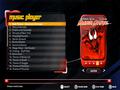
The sequel, Venom and Spider-Man: Separation Anxiety, corrects some of the issues from Maximum Carnage almost immediately. The game is made easier thanks to a password system to keep track of progress. The ability to find secret rooms is less obtuse. You can now choose between playing as either Spider-Man or Venom for the whole game, but more importantly, you can now play the game from start to end in two-player co-op. That would be enough to make this seem like an improved title over Maximum Carnage, but there are elements that make the former title feel better. Enemies and even a few locales from the first game are reused in this title, with only a bit of recoloring to make them seem different. The traversal aspects of the first game are reduced significantly, and the story feels more basic than what was in Maximum Carnage. It's still a fine game overall, but it isn't as memorable as its predecessor. For those wondering, both the SNES and Genesis versions are available, and the differences between versions haven't changed at all.
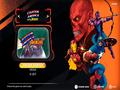
The final game in this collection is Captain America and the Avengers, a Data East game whose current publishing duties fall on both Throwback and G-Mode, depending on the version you're playing. Much like X-Men, the arcade game is a beat-'em-up for up to four players, and you play as either Captain America, Hawkeye, Vision or Iron Man on your way to defeat Red Skull and all of the Marvel villains he's somehow brainwashed to do his bidding.
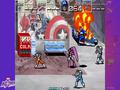
Unlike X-Men, Captain America and the Avengers is more than just a beat-'em-up, as you have sections where the game transforms into a shooter. Despite the genre change, the shooting portions are very enjoyable mostly because a four-player shoot-'em-up is so rare. It's also good that these sections play well, since the main beat-'em-up stages play so unfairly. The minute you connect with a close-range blow, the enemy immediately inflicts a counter-blow since there's no combo system. You're going to depend on lots of projectile attacks and air attacks to avoid getting hurt, and both require you to hit the jump and attack buttons to execute. While this was a very enjoyable game at the time of its release, it's not so enjoyable now thanks to other beat-'em-ups eclipsing it with far better playability.





The Genesis version is simply a port of the arcade game, and it has some limitations by comparison. All four heroes are present, but the number of players is reduced to two. The sound comes close to the arcade but doesn't quite match it note for note, and the same can be said for the graphics, which feature a more limited color palette and reduced character size. This version might be the one you'll want to play more because the game moves a bit faster than the arcade, and the attacks feel like they connect properly. Most importantly, you can initiate some basic combos just like almost every other beat-'em-up of the time. The combat system feels smooth when compared to the mandatory give-and-take of the arcade. This is an excellent port that does the rare task of surpassing the source material in key areas.
The fascinating NES version is vastly different from both the Arcade and Genesis iterations. The game is transformed into a single-player adventure game in the same vein as Capcom's Bionic Commando, where you go from city to city to fight enemies. The gimmick is the ability to switch characters, but that hook is pared back greatly since you can only switch between Captain America and Hawkeye, since both Vision and Iron Man have been defeated by The Mandarin. That switch also only occurs if they're in the same location, so switching between characters means that you switch between the actual levels.
For the most part, Captain America and the Avengers is serviceable but flawed. For example, trying to rescue your partner means having to replay the same levels multiple times, since no level is ever fully cleared out. The only way to defeat a level that doesn't contain a boss is to find the hidden orb that acts as a key for the exit. Bosses take too many hits to kill without any visible sign of how close you are to defeating them. You also can't rebind the controls, so having your jump and attack buttons switched around takes lots of getting used to. While Captain America and the Avengers isn't the worst game in the bunch, you won't return to it often compared to the compilation's other titles.
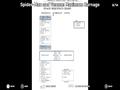


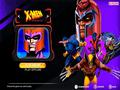
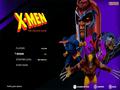

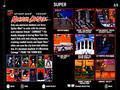
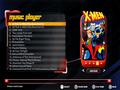
When it comes to extras, there are a few that seem to be standard for compilations like this. You have the magazine ads for all of the games, but Maximum Carnage gets the lion's share of that. Both box art and instruction manuals are available, and all of the trademarked stuff has been cleanly removed. There's artwork that's simply the box art minus the logos. The design document is perhaps the most interesting of these extras, as it gives you rough notes of how the game is laid out. The only knock is that there's only a design document for Maximum Carnage; it would've been interesting to see how the other titles were planned out.
PC players would have no difficulty running this compilation, no matter the device or operating system. The game runs completely fine whether you're on Windows or Linux, and there's no tweaking necessary. It isn't marked as Verified at the time of this writing, but the game's performance on the Steam Deck is practically perfect. There are no drops in performance, while the battery life on the LCD version of the Deck hits around four hours on a full charge when running the heaviest game, X-Men, and it can go higher if you're running other titles. The only slight drawback is that you can tell the game to run at a 1280x800 resolution, but it'll display at 1280x720 instead.
Aside from the fact that the collection preserves titles that would otherwise be considered lost due to the trials of licensing, Marvel Maximum Collection is a game that will garner varying degrees of praise depending on which title you're playing. Two-thirds of the titles provide a very fun time under the right conditions, and while Captain America and the Avengers can be hit-and-miss for some, Spider-Man and X-Men in Arcade's Revenge is just a bad game whose only value is as a title of curiosity. That's not a bad batting average for the compilation, and while it would've been better if some of the more memorable Marvel Genesis titles were also included, what is present will be satisfying enough for fans of Marvel and the late 8-bit and 16-bit eras.
Score: 7.5/10
More articles about Marvel MaXimum Collection