





Monster Hunter Stories is a subfranchise that I've always enjoyed, but it felt like it struggled to find its footing. The first game in the series felt slightly awkward and half-baked, and the sequel, while extremely fun, battled to find its own identity. That is why Monster Hunter Stories 3: Twisted Reflection is such a delight. It's the first Monster Hunter Stories that hits all the marks. It has an engaging gameplay loop, excellent combat, and a story that feels more than perfunctory. It's easily the best Monster Hunter Stories game to date and a fantastic RPG in its own right.
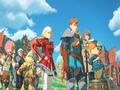
Monster Hunter Stories 3 opens up several hundred years after the previous game in the series. Players take on the role of the prince or princess of the kingdom of Azuria, which is a peaceful land of plenty that's under threat of invasion from its neighboring kingdom of Vermeil, which is being devastated by a blight and encroaching crystallization. Hope is found when the protagonist's mother finds a Rathalos egg … but unfortunately, the egg hatches not into one Rathalos but twins, a cursed omen. The protagonist's mother flees with one of the Rathalos and leaves the other behind for your protagonist to raise. Rathalos might be the key to saving both kingdoms from destruction, so your hero and their fellow Monster Riders try to figure out how to save everyone, human and monster alike.
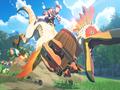
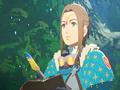
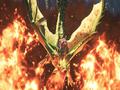
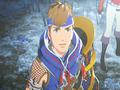
Monster Hunter Stories 3 has the most mature story in the series to date. It's largely an anime-inspired and relatively lighthearted adventure, but it's far more in line with a standard JRPG than the more child-oriented plots of the previous games. This works well in its favor, though. It is far easier to get engaged with and enjoy the plot when it seems to take the subject matter somewhat seriously, and the dangers of monsters and risk of war add stakes and tension from the get-go. I wouldn't say it's a game to play exclusively for the plot, but it was much easier to get engaged with the world and characters than in the previous games.
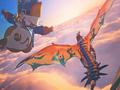
Exploration in Monster Hunter Stories has received a huge boost. From basically the start of the game, you're given access to wide-open areas that you can explore freely. Your traversal abilities depend on the Monsties you have in your party, but even your basic Rathalos can glide, jump, shoot fireballs, do melee attacks to knock down stone walls, and roar to stun enemies. Pretty quickly, you can unlock the ability to climb walls, swim, and various other movement options. The game is divided into multiple hub areas, and you're given basically free rein to take on as you like. This does wonders for helping the game feel more like actual monster hunting, since you're basically given a sandbox to play in. If you see an area, you can most likely go there.
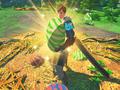
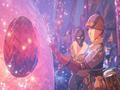
A major part of the game is raising Monsties, the game's name for friendly monsters. You do this by finding monster dens, either located randomly throughout the world or spawned by forcing an enemy monster to retreat. Either way, once you go into a den, you'll find a nest full of eggs and can choose to grab a randomly generated one. If you don't like the egg you get, you can redraw, but the more you redraw, the greater the chances of a monster coming in and interrupting you. In a merciful change from the previous games, the dens are now "all killer, no-filler." You go in, the monster nest is right there, and you can grab an egg and leave in a few seconds. This decreases the risk of exploring a den, but in terms of quality of life, it's a huge improvement.
This also ties into the new habitat restoration system. Each area in the game is divided into multiple subzones, each guarded by an invasive monster. Once the monster is defeated, you're able to release hatched Monsties into the zone. Doing so helps repopulate the species that live there, which in turn increases the quality of their eggs and gives them rare genes and abilities. In addition, you're able to put Monsties who are not from that zone in there. Each zone has a specific element associated with it, and if you release Monsties there, you'll begin to discover eggs in that zone that are dual element monsters, such as a Khezu with ice/lightning typing instead of just lightning. There are even special "mutant" monsters who will only appear if you fulfill certain conditions, such as the poison Dreadqueen Rathian only appearing in zones with a lot of Rathians and a lot of poison monsters.
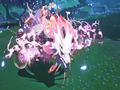
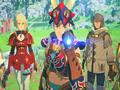
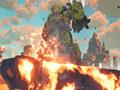
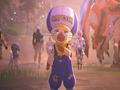
I really adore this system. Not only does it give you more to do with your Monsties than just let them sit in your inventory, but it also lets you really customize how you want your monsters to function. Refilling habitats also populates the world with more monsters to make it feel more alive, and it does a good job of separating the ecology-themed Riders from the standard Monster Hunters. It can get a little repetitive, but thankfully, it doesn't take many monsters to raise an ecology ranking.
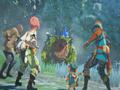
Of course, no matter what, this is still a Monster Hunter game, so the primary thing you'll focus on is hunting monsters. If you've never played the previous Monster Hunter Stories games, it's important to note the combat isn't real-time action but turn-based RPG. You have direct control over your protagonist and their Monstie, and you're joined by an AI-controlled ally. Your overall goal is to take down the monster, or monsters, that you're fighting while keeping your own party healthy enough. Go down three times, and you lose the battle no matter what, with those three downs shared between you and your Monsties. You can replenish these with items, but combat can be fast and lethal, and it's important to plan your way through fights.
As in the standard games, your character can go into battle equipped with a wide variety of weapons, including bows, charge blades, gunlances, hammers, hunting horns, and long swords. Each weapon has its own distinct style. Hunting horns, for example, play songs depending on the kind of attack you do, and they can build up to powerful skills. Bows apply different coatings to change the status effects they can inflict. You also can equip different kinds of armor, which in turn have different strengths and weaknesses. Thankfully, layered armor is now instantly created the first time you craft a set of armor, so you don't have to sacrifice style for power.
A major part of the combat is a rock-paper-scissors style weakness chart. You can choose to use power, technique or speed attacks, with power beating technique beating speed beating power. Your protagonist can choose which one they want to use, but their Monsties are generally limited to a specific attack type. You can unlock special moves that allow them to go outside of the norm, though.
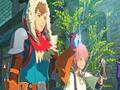
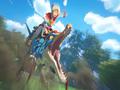
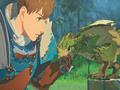
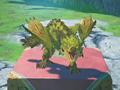
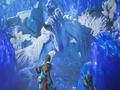
Thankfully, you can switch Monsties at any time. If you are being attacked by an enemy, the game compares attack types in a head-to-head. If you're on the winning end of the triangle, you overwhelm the enemy and nullify their attack. If you're on the losing end, you take additional damage. Each enemy has patterns, so it's up to you to learn them to effectively counter attacks. Winning head-to-heads fills up your kinship gauge, and when that is full, you can choose to ride your monster, giving you a full HP restore and allowing you to use powerful kinship attacks. Time it so you and your AI partner are riding at the same time, and you can do even more powerful combo attacks.
New to the combat system is the Wyvern Soul mechanic. This is somewhat akin to a stagger or break gauge, which have been super popular in recent RPGs. Your attacks do damage, but they also reduce the Wyvern Soul gauge. Deal enough damage to the gauge, and the enemy may become staggered, giving you a turn where the enemy's attacks are almost assured to miss. Break it entirely, and the enemy will be toppled. After an enemy is toppled, you can either let them stay toppled and give yourself a turn where they can't attack, or you can activate a Syncro Rush attack so all your characters attack at once for massive damage — in addition to giving you a massive boost to your Kinstone gauge.
All of this is important to deal with the new Feral Monster mechanic. Feral Monsters are monsters that have body parts coated by the encroaching crystal substance. If you attack these body parts or use certain abilities, the monster will unleash a brutal counterattack. On the other hand, as long as those body parts are intact, they have access to brutal counterattacks. By staggering and toppling the enemy, you get time periods when you can attack those parts without risk. Break the crystalized body part, and the enemy becomes far more manageable.
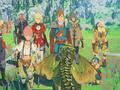
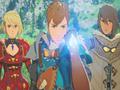
The combat system in Monster Hunter Stories 3 builds on the previous games but is much improved. The addition of the Wyvern Soul mechanic, the fact that enemies have more varied attacks, and the general restructuring of combat makes everything feel better. It's still recognizably the same combat system, but it has enough new flourishes and mechanics to make it fun to play. It also more heavily rewards thinking about the enemy you're going to face by encouraging you to plan which weapons and equipment you'll bring to a fight. This makes things feel far more in line with standard Monster Hunter gameplay.
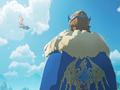
Monster Hunter Stories 3 is easily the best-looking game in the franchise to date. Moving toward a more Breath of the Wild art style, the visuals and cinematics show a massive improvement over the last game in the franchise. It's a delight to see in motion. However, the frame rate suffers some very notable drops on the Switch 2, especially in the handheld mode. It's not enough to ruin the experience, but it's worth noting. The soundtrack is excellent, and the game's voice acting is shockingly good. The protagonist is now voiced and has their own personality, and it goes a long way toward making them feel like a character.
Overall, Monster Hunter Stories 3: Twisted Reflection is best described as a refined and improved Monster Hunter Stories 2. It doesn't really change the core concept, but pretty much every change in the game is for the better. The new story is easier to engage with, the combat system is more fun than ever, and in general, it's a great leap forward without losing anything that made the previous games fun. Only some minor frame rate issues drag down the Switch 2 experience, and they're not enough to sour an otherwise fantastic game.
Score: 9.0/10
More articles about Monster Hunter Stories 3: Twisted Reflection