




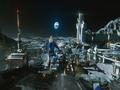
For the past decade or so, Capcom has been successfully iterating on known franchises (Monster Hunter, Resident Evil, Street Fighter, etc.). When game director Cho Yonghee and his team decided to make Pragmata, they wanted to make something that felt new and fresh. Pragmata manages to do this, while also using familiar mechanics to smoothly ease players into its world (or moon as the case may be).
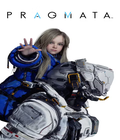
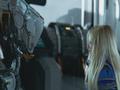
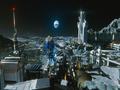
Pragmata tells the story of Hugh and Diana, an astronaut and a child-like android who are both trapped on a moon base controlled by an AI that has already killed everyone who lived and worked on the base. Don't mistake Pragmata for an escort mission game, though. Hugh and Diana are a team; neither one can survive without the other.
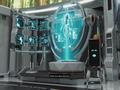
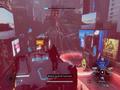
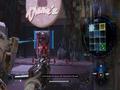
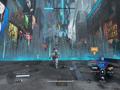
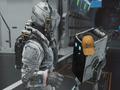
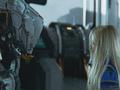
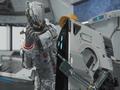
Hugh is a traditional run-and-gun character. He starts out slow, but you can unlock thruster upgrades that vastly improve his mobility. Diana spends most of the game riding shotgun on Hugh's back, and her hacking ability is a core element of gameplay.
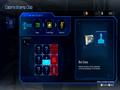
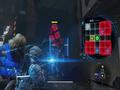
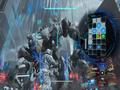
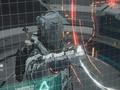
Hacking in Pragmata isn't a one-off. You have to do it in real time, while still avoiding enemy attacks. When you target an enemy, Diana's hacking matrix appears in the upper right. You use the controller face buttons to navigate a cursor through various icons to power up the hack before closing it out on a green tile. Successfully completing a hack damages your enemy and disables its armor plating, exposing the vulnerable inside bits to Hugh's guns.
If you've played the Pragmata Sketchbook demo, you have an idea of what to expect, but the demo doesn't reveal the depth of play that unveils as you unlock upgrades, new mods, and new hacking modes throughout your adventure. Initial hacks are simple enough, but stronger enemies have some defenses that will cause your hack to fail if you move into the wrong tile.
Hacking and shooting may sound complex, but it quickly became second nature on a controller. I never found it overwhelming, but I relied on successful hacks so much that I poured all of my upgrade points into hacking and health. I completely ignored upgrading my default weapon, as it wasn't needed. Pragmata supports keyboard and mouse on the PC, but the console version is controller only.
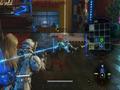
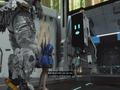
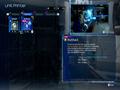
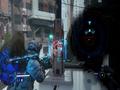
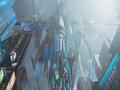
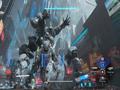
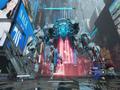
I suspect the real draw of the hacking mechanic is the risk-versus-reward element that comes into play. More complex hacks (taking the time to go through default and bonus nodes) can vastly increase the damage caused by a hack, but it also extends the time that you're vulnerable. Yes, you can still move and shoot, but when you're distracted, the chance of getting hit goes up, especially when there are multiple enemies around.
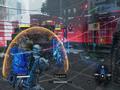
During my playthrough, it wasn't strong enemies that worried me. One on one, I could take pretty much any opponent. It was the groups that were dangerous. Crowd control is key in Pragmata, especially when you have to hack your opponents to deal any real damage with your guns. If you don't have good spatial awareness, you're toast.
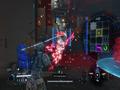
That said, crowds are also where some of my most enjoyable hacks came into play. You can unlock multiple specialty hacks in the game. These are limited use (just like every gun but the default), so you need to be judicious when using them. Chaining the right ones can be a godsend.
For example, one of my favorite combos to bring into a level was a hack that lowered defense, a hack that let me hack multiple enemies at once, and a hack that caused hacked enemies to attack other robots instead of me. Getting enemies grouped in close enough for the multi-hack to work and then quickly performing a hack that touches on all three nodes meant that I could sit back and watch while the AI robots blasted themselves apart. Pulling this off was an exceedingly satisfying experience, especially when a stronger-than-normal enemy was part of the group.
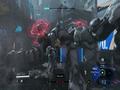
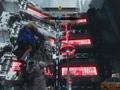
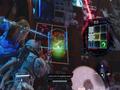
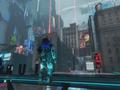
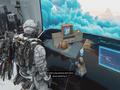
Another useful option would cause hacked enemies to overheat faster. Overheated enemies are temporarily downed, allowing Hugh to run up and deliver a devastating attack. There is a mode that turns all of the default hack nodes into heat-generating nodes. It notably changes the way the game plays.
Pragmata may not be a dungeon crawler or RPG adjacent, but it does have flexibility in character builds. While I focused on a hacking build, another writer on staff played with more of a strike build. When facing off against bosses, I would always check my selected mods before entering into a fight. Having the right mods enabled could make an otherwise challenging encounter a whole lot easier. The development team really does want you to play Pragmata your way.
That flexibility also extends to the story and the character development between Hugh and Diana. Shōji Kawamori (the creator of Macross) consulted on Pragmata's world building, helping to ensure story depth for those who want it. You also don't have to dig in if that's not your jam. Players can just follow the major story beats without feeling lost. For those who want to dig into the lore, there are plenty of optional emails, notes, and VR recordings to find.
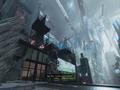
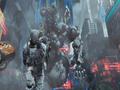
While it's difficult to identify any one inspiration in Pragmata, the team appears to be inspired by a wide range of sci-fi both old and new. Story themes from the novel Blood Music (1985) are woven into Pragmata, along with themes from Neon Genesis Evangelion (1995) and the more recent Netflix series, The Silent Sea (2021). Visually, the default opponent in the game looks to be inspired by The Terminator (1984) endoskeleton. Because certain levels in the game are meant to be created by a partially defective AI, they look like a digitally deformed dream world from Inception (2010).
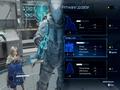
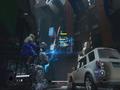
What makes Pragmata's world work is how it pulls inspiration while weaving those themes into a new adventure. The sci-fi elements aren't the only draw, though; the interactions between Hugh and Diana are a highlight.
It's clear that whoever wrote Pragmata's script is either a parent or friends with parents of young kids. (As a parent of a young child, it's easy to recognize a kindred spirit.) Diana's enthusiasm and naivete are spot-on, as is Hugh's loving exasperation. Early on in the game, Hugh asks Diana if it's safe to take a certain route. She responds that if they make it to their destination OK, then it's safe. At another point, Hugh keeps Diana from falling down a pit. He was worried, but she doesn't quite understand because if she got damaged, Hugh could just fix her.
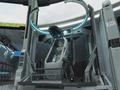
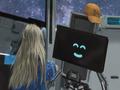
Outside of the main story, there are a number of optional interactions with Diana in the Shelter, which is an area that acts as a base for Hugh and Diana. You can ignore these if you choose, but watching them is worthwhile, as both characters grow and learn about each other. There is even a hide-and-seek mini-game that you can play with Diana. It doesn't serve any purpose aside from playing hide-and-seek, but it's there because that's something kids do.
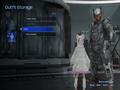
Pragmata is a linear game, but rolling credits the first time isn't the end of things. Beating the game once unlocks a new weapon, new outfits, a new difficulty mode, a post-game mode called Unknown Signal, and New Game+. Unknown Signal is Pragmata embracing being a video game. It tasks you with collecting all of the tracked items (100% in each level), beating upgraded versions of all of the bosses, beating 10 challenge levels, and then beating an upgraded version of the final boss.
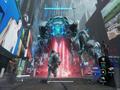
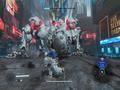
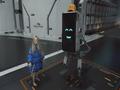
Because you've already got fast travel points unlocked, Unknown Signal doesn't feel like a chore. Collecting all the available upgrades also helps ensure Hugh and Diana are appropriately powered up for the challenge levels. Battling the upgraded bosses gives you a chance to test out mods that were acquired later in the game. Interestingly enough, because I was powered up, most of the upgraded bosses felt easier than the first time around.
Rolling credits the second time rewards you with some concept sketch artwork (during the credits), a slightly tweaked ending (the "real" ending), and another gun to play with. The unlocked weapons and outfits are available across all your save games, even earlier saves. The global unlock is a nice touch.
My only real complaints have to do with the training missions in the Shelter and the locking of the art gallery behind the deluxe edition. If you jump into the training missions as soon as they are unlocked, they flow well. On the other hand, if you play through most of the game and have upgraded Hugh's mobility before jumping into the training missions, it can be jarring to be stuck with his default move set.

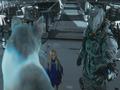
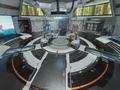
In the standard version of Pragmata, there is no art gallery. That is a feature listed as one of the benefits of Pragmata's deluxe edition. North American buyers picking up a physical copy only have the option to buy the standard edition. After seeing the concept art in the credits, omitting the art gallery seems like a disappointing omission.
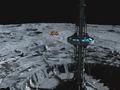
When Capcom first announced Pragmata six years ago, they couldn't have known the game would be launching a week after the Artemis II mission set a new record for human space travel. Just as NASA's moonshot was a success, so is Capcom's latest game. If you want a polished experience that brings something new to the table, you can't go wrong with Pragmata.
Score: 9.0/10
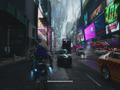
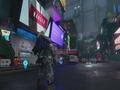
Editor's Note: Eagle-eyed players will notice the "sightseeing" buses in the New York level are all branded Artemis. NASA's Artemis program is the successor to the Apollo program and is focused on returning astronauts to the lunar surface.

More articles about Pragmata