

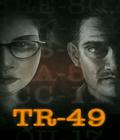




Inkle's games have centered around thinking, rather than combat. There was a modern interpretation of a Jules Verne novel with 80 Days, hieroglyphics in Heaven's Vault, and detective work in Overboard and Expelled. The team has a knack for this kind of stuff, and its latest title, TR-49, is no different. What makes it stand out is its fairly unorthodox design that grabs your attention even if there's nothing immediately exciting about it.
TR-49 has players taking on the role of Abbi, a woman who wakes up in a church basement. You have no idea how you got there, but you find that the church has access to two things: a still-functioning computer from World War II and a two-way radio. On the radio, a person named Liam is asking for help. Using the computer, you're asked to find a document that is important enough to change the world. However, everything in the computer is encrypted, and your first task is to understand how the machine works.
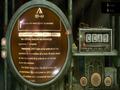
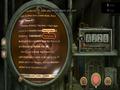
The computer's interface is distinct and a big part of the game's identity. Pulling the lever on the machine's right side produces a radial keyboard used to enter a four-character code. The first two characters are always letters, and the last two are always numbers. Entering the correct code takes you to a page in the computer's database, and while the pages are mostly garbled, some parts have already been deciphered, like the footnotes from previous users. Other things that have already been deciphered include whole codes or parts of them and some titles, all of which are automatically documented in your in-game notebook, which you can interact with.
It doesn't take long for you to discover that the pages are snippets of books and other important documents. The code refers to the initials of authors in the game world and the final two digits of the year in which said document was published. Matching the code in your notebook with the correct title of the document allows you to fully decipher the document, which then opens up more hints and information about other codes.
The exercise feels like you are trying to go to a website and uncover every page, since you're essentially entering the equivalent of URLs and clicking on things similar to hyperlinks. That idea doesn't sound so exciting in print, but it is quite intriguing once you start doing it. There's a sense of discovery upon uncovering new pages that you didn't know existed, and it does yield some excitement when it happens. The sense of accomplishment is even greater when you make a good match for code entry and title and see all the previously garbled texts transform into something legible on the spot. It is the kind of euphoric hit that occurs often, since there are around 50 pages to discover.
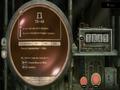

Part of the reason this works is because TR-49 doesn't immediately do all of the work for you. There are some highlighted words that immediately link you to places, but not everything is explicitly spelled out. Some codes are only discovered when you read the text and put some thought into what a possible code would be. For example, one document may not be discoverable until you figure out the author's full name, look up information about when they died, and then figure out what it means when you see a reference to something published a year after their death. The game absolutely rewards reading comprehension and figuring out stuff on your own, and it makes you feel smarter as a result. Of course, you can try to brute-force some things, which can be viable in some situations, such as trying to discover how many documents from a publishing house were stored during a specific time period, but the game tends to downplay blind luck in lieu of actual deduction, especially when it comes to understanding how to reach any of the game's four endings.
The other reason the gameplay loop works is because of the stories being told in the texts. This isn't meant to diminish the importance of the main story, as the performances for both Anni and Liam are very well done, and those who love radio plays and similar offerings will enjoy it. That story seems fairly basic compared to what you read in the texts and related notes: science mixed in with doom, personal lives of the people who operated the computer, and reviews that both praise and lambast an author's work. There's a fascinating world narrative, and even though you only see snippets, the entries make the world feel very rich.
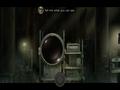
There is one thing that hurts the game: its stability. As you're playing, you'll notice that there are moments when the game pauses for a second before becoming active again. There's no specific moment at which this occurs, so you may notice it during code input or when scrolling through an entry. Eventually, the game experiences a very long pause before crashing altogether. We reviewed the game on a Switch 2, and these crashes occurred twice in a one-hour timespan in the review build. Thankfully, there's no progress loss when this happens, as the game seems to be saving whenever you take any action, such as retrieving a book title, making a good match, or entering a code. It remains annoying that this type of thing is happening at all.
TR-49 is an engrossing puzzle game. The idea of solving a mystery through hyperlinking is novel, and the simplified implementation of decoding pages by matching code references with the title is thrilling in action, even if it doesn't seem that way on paper. The main story is fine, but the story told within the documents will be more interesting to some, and the presentation is also good. The performance issue drags down things, and if that can be patched out, then TR-49 is a game that earns its place in a puzzle fan's library.
Score: 7.5/10

More articles about TR-49