







 Final Fantasy VII Rebirth continues the story of Final Fantasy VII Remake, taking Cloud and the party out of Midgar into the wider world.
Final Fantasy VII Rebirth picks up shortly after the events of Remake. Cloud and his companions have escaped Midgar, leaving chaos and upheaval in their wake. Now on the run from the Shinra Corporation, they set out to track down Sephiroth, Cloud's former mentor, whose actions continue to leave a trail of destruction across the world. What begins as a pursuit of a single enemy soon grows into a struggle for the planet's survival. Along the way, the party faces mounting dangers, difficult choices, and the ever-present threat of tragedy as the stakes continue to rise.
Rebirth serves as an exceptional follow-up to Remake. Covering roughly the middle portion of the original game's story (up to the end of Disc 1), it delivers about as strong an adaptation as fans could have hoped for. While it follows the same broad sequence of events, it expands on them in meaningful and often surprising ways.
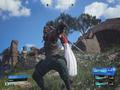




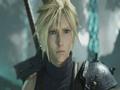
The game's greatest strength is its treatment of the cast. Nearly every character receives substantially more development and screen time, with expanded interactions that deepen their relationships and personalities. As a result, characters who were comparatively underdeveloped in the original, such as Red XIII and Cait Sith, emerge as some of the most charming and memorable members of the party. The additional focus helps the entire ensemble feel richer, making their friendships and struggles far more impactful than before.
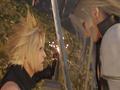
The most controversial element is likely to be the game's meta storytelling. If you've finished Remake, it's already clear that the trilogy isn't quite what it initially appears to be, with an additional layer of narrative involving forces seemingly trying to alter the course of the story. These meta elements are mostly delivered through interludes between major story beats, and they can feel strange or out of place at times. I've largely come around to them. While unconventional, they add a sense of mystery and tension that a straightforward remake wouldn't have been able to achieve, and the story leans into that ambiguity throughout.
Rebirth is fully aware that one of the most iconic moments in video game history lies ahead, and it consistently plays with expectations, inviting you to question whether it will happen the way you remember ... or even happen at all.
The biggest change from Remake to Rebirth is its shift toward a more open-world structure. The game world is divided into several large, explorable regions, each packed with side-quests, hidden encounters, and a wide variety of activities. I was surprised by how well this design works in practice. It can occasionally feel overwhelming due to the sheer density of content, but it also ensures there is always something to discover or engage with, keeping the experience consistently active and rewarding.

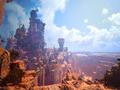


For the most part, I found this to be incredibly fun. While it includes the now-familiar "climb a tower to reveal map waypoints" mechanic, those waypoints usually lead to worthwhile and engaging content. There are some excellent optional battles, including encounters with massive summon monsters that unlock later in the game. The game constantly rewards exploration, and I was rarely bored. Because the world is divided into distinct zones, each area feels dense with activities and meaningful things to discover.
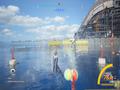
The one sticking point for some players is the sheer number of minigames. While this is consistent with the spirit of the original Final Fantasy VII, it’s fair to say that Rebirth leans heavily into a wide range of optional, one-off activities of varying quality. Some of the minigames are genuinely excellent, like the Rocket League-style match featuring Red XIII. Others are far more forgettable, such as a peculiar mushroom-picking challenge that never quite comes together. Not every minigame lands, but even the weaker ones help give the world more texture and variety.
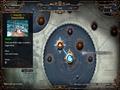
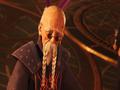
The game's true standout minigame is Queen's Blood. This collectible card game can be played throughout the world, and it's genuinely fantastic. Players place cards across three lanes to capture territory and strengthen adjacent spaces, creating a surprisingly deep and strategic experience. The card pool is enormous, with cards representing nearly every monster and major character in the game. Much like Gwent in The Witcher 3, Queen's Blood is compelling enough that I'd happily play it as a stand-alone title. In Rebirth, it's an absolute delight. It even features its own wonderfully absurd and entertaining storyline that's worth following to its conclusion.
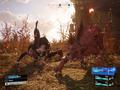
Rebirth's combat system remains very close to the one introduced in Remake, but it includes several meaningful refinements. The core mechanics have been reworked in subtle but impactful ways. Aerial combat is now fully integrated into the experience, with most characters able to engage airborne enemies more effectively. Several abilities that felt nearly essential in Remake, such as Deadly Dodge, have been incorporated into characters' base move sets. Returning characters have also received adjustments alongside a host of new abilities. For example, Aerith's relatively underwhelming Tempest skill has been replaced with the ability to teleport between her wards, giving her far greater mobility and flexibility in combat.
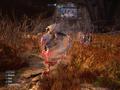
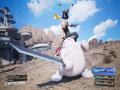
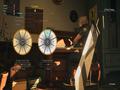
In addition to Yuffie, who returns from the DLC, the game introduces two additional playable characters. Red XIII is the most ground-focused member of the cast, and his mechanics are built around a Vengeance gauge that fills as he blocks and parries enemy attacks. Once charged, the gauge can be spent to enter a powerful offensive stance or to unleash potent healing and support abilities. Cait Sith brings one of the game's most distinct play styles. A robotic cat riding a giant moogle, he can fight as a single unit for strong offensive pressure or separate from the moogle, allowing it to draw enemy attention while Cait focuses on casting spells and providing support. Yuffie retains all of the speed, versatility, and combat prowess that made her such a standout in the Intermission DLC. With strong ranged and melee options, elemental flexibility, and excellent mobility, she remains one of the most adaptable characters in the roster.
The biggest additions to Rebirth's combat system are Synergy Skills and Synergy Abilities. Synergy Skills are special team-up moves that become available based on your party composition and can be used at any time. They provide both offensive and defensive utility, giving each character pairing its own flavor. For example, when paired with Aerith, Cloud gains access to Spellblade, a powerful technique that charges and unleashes a devastating magic-infused sword attack. While controlling Aerith, you can have a melee ally follow up on her ranged attacks, execute a magical combo that restores MP, or assign a party member to guard her while she casts, helping offset her vulnerability in combat. These abilities do an excellent job of reinforcing party synergy, encouraging players to experiment with different character combinations and making every team composition feel distinct.
These skills are a blast to use and integrate seamlessly into each character's normal combo strings. They also build ATB gauge at an impressive rate, making it highly rewarding to coordinate attacks with your teammates whenever possible. The trade-off is that a character participating in a Synergy Skill isn't acting independently, and many of these abilities pull partners close together. As a result, a poorly timed combo can leave both characters vulnerable to the same enemy attack.
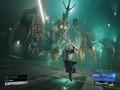
By contrast, Synergy Abilities are spectacular team attacks unique to each character pairing. To activate them, both characters must build their synergy gauge by spending ATB charges in combat. Once the gauge is full, they can unleash a powerful combo attack. These abilities are essentially mini limit breaks: flashy, cinematic, and immensely satisfying to watch. They deal significant damage while also granting powerful bonuses, such as temporary unlimited MP or access to higher-level limit breaks. More than visual spectacles, they're impactful tools that can dramatically shift the momentum of a battle. In many ways, they resemble the Triple Techs from Chrono Trigger, only with a much bigger budget and even more flair.
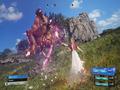

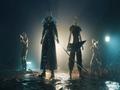

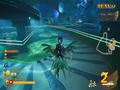
Rebirth is a fantastic evolution of the combat system in Remake. It's clear the development team listened to feedback about the rough spots in Remake, and Rebirth has perhaps my favorite action-RPG combat system ever. Each character is distinct, there's a ton of room for customization, and the Synergy system is both fun to use and incredibly cool in action.
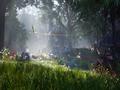
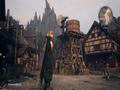
The biggest question surrounding the Switch 2 version of Rebirth is how it performs, and the answer is a mixed one. Overall, the game runs well enough, that it never feels like a fundamentally compromised experience. Moment-to-moment gameplay holds up, often approaching the smoothness of the PS5 version, and if you enjoyed the Switch 2 release of Remake, this entry should feel familiar and broadly satisfying. That said, there are noticeable technical trade-offs. Performance drops do occur, pop-in is frequent, frame rates can dip during more intense moments, and the image quality often looks soft. Playing in handheld mode helps mitigate some of these issues, but they remain visible throughout. Even so, it remains a very playable and acceptable version of the game. The underlying strength of the original visuals carries it far. Rebirth was a strikingly beautiful game to begin with, and even with the hardware limitations, it's still a pleasure to step out from the opening town into its vast, grassy landscapes filled with detail and roaming monsters.
The soundtrack and voice acting, however, are entirely uncompromised, and Rebirth may well feature the best work in the entire franchise. The score blends classic FF7 themes with an abundance of new compositions, resulting in a constantly engaging and often overwhelming variety of music. Even the smallest moments are treated with care; a simple side quest, such as helping a dog find its way home, can introduce a surprisingly memorable and catchy track that elevates the entire experience. The voice acting is equally strong, with a cast that consistently delivers outstanding performances. Much of the game's humor and emotional weight relies on these performances, and the actors absolutely deliver. It's hard to imagine the game being even half as funny without the strength of its line readings and comedic timing.
Final Fantasy VII Rebirth remains as strong now as it was at launch. Its compelling, carefully crafted story and best-in-class combat system make it an essential experience for anyone who enjoyed the first entry in the trilogy. A slight overreliance on minigames can occasionally slow the pacing, but it rarely undermines the overall experience. While the Switch 2 version does come with some clear technical compromises, none of them meaningfully diminish how consistently fun and engaging the game is.
Score: 9.0/10
More articles about Final Fantasy VII Rebirth