



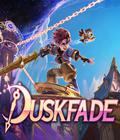
 Shatter the shackles of time as you jump, swing, and slash through a fantastic world in this love letter to classic 3D action platformers.
Originality isn't always the most important thing. Sometimes a game that is unashamedly inspired by another title can still be a lot of fun, and Duskfade is one of those games. It's so deeply inspired by Kingdom Hearts that the first costume you unlock transforms your weapon and clothing into Sora's exact color scheme. This isn't a simple knock-off, though. Duskfade takes its inspiration from Square Enix's game and runs with it in its own distinct direction. The result is something that feels both familiar and different, making for a surprisingly fun little budget platformer.
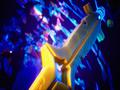
Players take control of Zirian, a young man who lives in a clockwork town with his sister and a surprisingly large bevy of adorable cloud people. Years ago, a terrible disaster left most of the world in ruins, with the remains of an ancient race of clock-making steampunk magicians scattered cross the landscape. Zirian's sister, Allira, has been attempting to learn about those ancient ways, but her investigations accidentally unleash a bizarre swarm of ink-like monsters and trap her inside a giant, ominous tower sealed with chains. Now Zirian must take up his grandfather's transforming clock-hand sword and set out to break those chains and rescue his sister.
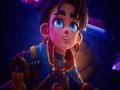
Duskfade's story is simple but well told. Adult players will likely see many of its twists coming, but the story beats remain effective, and it's easy to empathize with characters who can sometimes be a little abrasive. Zirian is a good-natured dork who is generally likable, but the game isn't afraid to call him out when he acts like a jerk. Allira is an equally interesting and sympathetic character, having been forced to grow up before her time and now struggling with the responsibilities that come with it. The result is a game that's particularly well suited for younger players while still being charming enough for older audiences to enjoy.
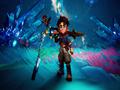
Duskfade is heavily inspired by the Kingdom Hearts series of games. Zirian looks and moves like Sora, right down to the transforming blade he carries over his shoulder, while the basic movement and level design borrow heavily from the older games. The biggest difference is that Duskfade is much more of a platformer than an RPG, leaving out the leveling and stats that define Square Enix's series. Instead, you'll spend most of your time navigating an increasingly convoluted series of pits, traps, and other hazards as you guide Zirian toward his sister's rescue.
As previously mentioned, Duskfade is heavily inspired by the Kingdom Hearts series. Zirian looks and moves like Sora, right down to the transforming blade he carries over his shoulder, while the basic movement and level design borrow heavily from the older Kingdom Hearts games. The biggest difference is that Duskfade is much more of a platformer than an RPG, leaving out the leveling and stats that define Square Enix's series. Instead, you'll spend most of your time navigating an increasingly convoluted series of pits, traps, and other hazards as you guide Zirian toward his sister's rescue.
The game constantly gives you new abilities as you progress. You start with little more than the ability to jump, dodge, and attack, but quickly gain powers ranging from a grappling hook that lets you zip between specific points to the ability to grind on rails like Sonic the Hedgehog. These abilities are naturally integrated into the platforming, as the game gradually shifts from simple jumps between platforms to sequences that require you to grind down rails, swing through a series of grappling points, and finish with a carefully timed air dash to reach the next platform.
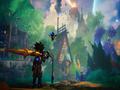
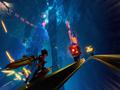
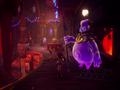
Exploration in Duskfade is a mixed bag. The environments are large and detailed, with multiple paths to explore and an abundance of secrets to find. Every area contains a wealth of collectibles, ranging from upgrade tokens and hidden costumes to items that let you customize the colors of your weapon and armor. There are also coins that can be traded for collectible art cards. If you enjoy hunting for items, there's a lot to find.
The problem is that the game's Metroidvania elements don't always work as well. Your first time through most areas, you won't be able to collect everything because you lack the necessary abilities, but the game makes backtracking a chore. There are few shortcuts, no real map, and often no clear indication of whether you actually have the ability needed to reach a particular item. I eventually stopped bothering to backtrack until I had unlocked all of the movement abilities, at which point revisiting each stage largely meant replaying it while grinding rails, passing through previously inaccessible doors, and checking every corner for the last hidden coin. Locking collectibles behind future abilities is a good idea, but Duskfade doesn't quite stick the landing.
Combat in Duskfade is also heavily inspired by Kingdom Hearts1, particularly the original game. Zirian starts with a basic attack combo and can dodge-roll through attacks or reflect enemy blasts with his sword. As you progress, you'll unlock abilities such as a shotgun-like Chronoblast, new forms for Zirian's blade that provide heavier attacks, and the ability to use your grappling hook to zip directly toward enemies. Some abilities require Temporal Energy, but this replenishes very quickly whenever you hit enemies with your blade. Cuckoo will also serve as an AI companion who occassionally joins in with their own attacks, but the impact is relatively minor.
Combat starts simply but grows more involved as new moves and enemies are introduced. The initial enemies (adorably inky blobs) are easy to defeat, but they're soon joined by bomb-throwing foes that explode when defeated, heavily armored enemies whose protection must be destroyed first, helmeted soldiers who buff nearby allies, enemies that are difficult to evade, and more. Combat becomes a matter of prioritizing the most dangerous enemies and eliminating them before they can cause too much trouble. This is especially important because healing is limited in a modern Estus Flask-style system: you can only carry a small number of potions, which are replenished by finding glowing objects throughout the environment.
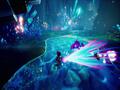
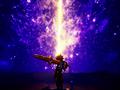
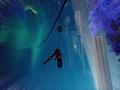
Boss fights combine platforming and combat. You'll generally start by fighting a boss normally, dodging attacks and striking during openings. Eventually, the boss will become invincible and turn the arena into a hazard, whether by raising lava, charging a powerful attack from a high platform, or surrounding itself with a barrier. You'll then need to complete a quick platforming challenge to break through this state before taking unavoidable damage. These sections sometimes include an additional platforming challenge that can restore one of your potions. It's a neat way to combine the two halves of the game, and I enjoyed the various gimmicks even when some of them were a little awkwardly presented.
Probably Duskfade's biggest issue is that the combat really feels pretty stiff. It's clearly going for a Kingdom Hearts feel, but those similarities also make it obvious how much of that game is missing. Many animations are simply too long, making it far more practical to rely on a repetitive dodge-attack-dodge-attack instead of trying to use heavier attack combos. I rarely used the grapple-to-enemy move, for example, because it only works against certain enemies and is slow enough that I was almost guaranteed to take damage while using it. The combat isn't terrible, but it becomes repetitive well before the end of the game. It also takes too long to fully develop, as you don't even unlock basic attack combos until roughly one-third of the way through the game.
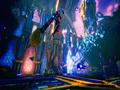
Visually, Duskfade looks fantastic. The bright, cartoony graphics pop, and the environments are varied and engaging to explore. The Kingdom Hearts influence is obvious, but it works in the game's favor, giving the entire experience a colorful and delightful aesthetic that helps it stand out. It also runs wonderfully on the Steam Deck, aside from a few slowdowns in particularly busy areas. The music is solid; while none of the songs particularly stand out, they do a good job of establishing the atmosphere and are generally pleasant to hear. The voice acting is also quite good, with Allira stealing the show. Her performance does an excellent job of selling the character's struggles.
Duskfade is a charming, enjoyable, and well-made little platformer that falls just short of being a true classic. The platforming and combat are fun, the story is well told, and the game's overall presentation is delightful. It's held back by stiff combat and tedious backtracking, but neither problem is enough to completely undermine the experience. If you're looking for a PS2-style platformer with a Kingdom Hearts flavor, Duskfade hits most of the marks and is absolutely worth checking out. It might not be the most original game on the market, but it is a darn fun one.
Score: 8.0/10
More articles about Duskfade