









 In the 1980s, Defender Of The Crown helped define a new kind of cinematic strategy game. Now it returns, rebuilt for modern platforms and remastered with an entirely new way to play.
The original Defender of the Crown was released in 1986 for the Commodore Amiga. Critics found its strategy gameplay overly simple, but it sold well thanks to its impressive presentation, showcasing the Amiga as a graphical powerhouse. As Cinemaware's first game, it also established the company as a developer known for pushing the graphical boundaries of video games. The game was subsequently ported to numerous systems, received a sequel for Commodore's CD-based systems, and was remade twice. Defender of the Crown: The Legend Returns is the latest version, containing two remakes, one of which takes the series in a vastly different direction.
Set during the Middle Ages, Defender of the Crown begins with the King of England returning victorious from the Crusades. After rewarding his most trusted knights with land and titles, one refuses and instead retreats to Sherwood Forest. In 1149, the king is assassinated without an apparent heir, leaving England's factions to fight for control of the kingdom. You play as the leader of one of these factions, attempting to overthrow your rivals and claim the throne.
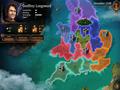

The game is a turn-based strategy title that plays almost like a board game, similar to Risk, but focused on England rather than the entire world. You build an army at home before creating a traveling force that captures territory, defeats enemy armies, and increases your income each turn. Capturing a main castle also gives you control of its affiliated lands, creating a cycle of earning gold, building a larger army, and conquering more territory. Between battles, you can enter tournaments to increase your fame and leadership, raid castles for gold, or rescue kidnapped maidens to further boost your leadership.
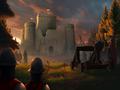
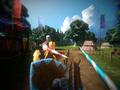
Several of these activities lead to their own minigames. Tournaments become first-person jousting matches where you aim your lance at an opponent in an attempt to knock them from their horse, while castle raids and maiden rescues switch to side-scrolling swordfights as you battle your way through enemy soldiers. Sieges are primarily a numbers game, with the larger force generally winning, although possessing a catapult lets you bombard the enemy walls. Destroying enough of the wall can significantly weaken the opposing army and improve your chances of victory.
The game offers three modes: Retro, Classic, and Kingdom. Retro is essentially the original Amiga version with gamepad-friendly controls. While that's ideal for longtime fans wanting to experience the original on a modern system, it also means all of the original's obtuse mechanics remain intact. Dueling provides little indication of how the fight is progressing and can end abruptly without explaining why you lost. Jousting tells you to aim your lance without making it clear what you're supposed to hit, while the catapult requires some trial and error to determine the correct amount of force. Once you understand these systems, they aren't particularly difficult, but the lack of feedback makes Retro feel more dependent on luck than skill.


Classic initially looks like the original with a modern coat of paint, but it adds several improvements. Autosaves and manual saves are both available, you can skip your turn instead of being forced to attack or enter a tournament, and sieges now include poison and flaming ordnance, features originally planned for the game. Dueling also receives a significant overhaul with blocking, thrust attacks, and energy meters that make fights easier to follow. Unfortunately, screen shaking can't be disabled, and the game still doesn't adequately explain mechanics such as becoming staggered or why taking damage while staggered doesn't immediately end the effect.
Classic also improves the jousting instructions, although losing can still be confusing when the game doesn't show you being knocked from your horse. Siege tactics are another welcome addition that ultimately seem ineffective, as the battle remains a numbers game despite the arrows indicating your commands. Building your army now ends your turn as well, removing the ability to immediately continue playing after recruiting troops. Classic is therefore a better version of Defender of the Crown than Retro, but it doesn't do enough to make the game's underlying systems truly accessible.
Kingdom, meanwhile, is almost a completely different game. The core concept remains, but most of the surrounding systems have been reworked. Instead of conquering multiple rival kingdoms, you now have one primary enemy, while the others provide resources and help clear the newly introduced fog of war. This forces you to gradually explore the map rather than simply heading straight for your target.
The biggest change is the battle system, which replaces traditional combat with a combination of customizable dice and cards. You and your opponent roll your dice, usually five each, before drawing four cards and potentially redrawing two. Your leadership and fame determine how many points you can spend on cards, which can modify the dice in various ways. One card might turn all of your twos into fives, another can add a die, while others can remove low-scoring dice from your opponent. Once you've spent your available card points, the dice totals are compared, with the higher score winning the battle.
This dice system also replaces several of the original minigames. During sieges, you get two chances to guess your opponent's dice, with successful guesses weakening their forces before the actual battle. Jousting similarly becomes a timed dice-rolling challenge in which you try to beat your opponent's total, but rolling a 1 wipes out your accumulated score and forces you to start over.
Kingdom also introduces a heart system. Losing a battle costs a heart, although you can immediately retry if you choose. Additional hearts can be purchased at certain locations, but losing them all ends your run. Death isn't entirely negative, however, as each defeat can unlock something new, including buffs that can be used from the beginning of your next attempt. This creates a satisfying progression loop where even failure can make future runs easier.
The transition to a dice-and-cardboard game feels surprisingly natural given Defender of the Crown's existing board game-like structure. More importantly, Kingdom makes the game's outcomes much easier to understand because you can see exactly why you won or lost. Streamlining the overall experience also makes runs shorter and failure less frustrating, since you can quickly start another attempt with new advantages. It's easily the best way to introduce newcomers to Defender of the Crown and, arguably, the best way to play the game overall.
There are a few drawbacks. The lack of multiplayer is particularly disappointing because Kingdom's 1v1, turn-based structure seems perfectly suited to both online and local multiplayer. Battles also can't be fast-forwarded, which becomes tedious when the outcome is already obvious. Finally, managing troops in your dice pool is unnecessarily cumbersome, as every change sends you back to the main map and forces you to re-enter the dice-editing screen.

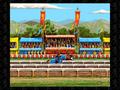
Graphically, the game looks quite good. The original Amiga graphics continue to hold up thanks to their colorful art style, even with minimal animation, while the modern visuals expand on that aesthetic with more detailed character models, lighting, and colors. The combination of modern elements, pixel art, and somewhat stiff animation gives the game a distinctive look that works well both in motion and in still images.
The sound is more restrained. Retro mode only features music on the title screen, opening cutscene, and at the beginning of tournaments, while the other modes use more tracks throughout the game. Most fit the medieval setting but aren't especially memorable. Sound effects are crisp, although there is no voice acting or even basic vocal reactions when characters are hit.
The game also runs well on both Linux and Steam Deck. Resolution isn't particularly important as long as text remains readable, and nothing appears blurry. Performance is similarly solid, with no noticeable slowdowns. Battery life is the biggest concern on Steam Deck, averaging around three hours on a full charge on a now-four-year-old Steam Deck LCD.
Defender of the Crown: The Legend Return will likely appeal differently depending on your familiarity with the original. Retro is best for longtime fans seeking an authentic experience, while Classic provides some welcome improvements without fully addressing the original's obtuse mechanics. Both modes can therefore be difficult for newcomers to appreciate. Kingdom is the game's saving grace, streamlining the experience into an addictive strategy loop where even defeat contributes to future runs. That mode alone makes the game worth recommending to anyone looking for light strategy, although the overall package should still be approached with some caution. What appears to be a simple strategy game can be surprisingly, and sometimes unintentionally, brutal.
Score: 7.0/10

More articles about Defender Of The Crown: The Legend Returns