

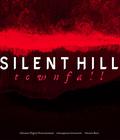




After years of dormancy, there's been a new Silent Hill title every year for the past three years. Starting with the excellent Silent Hill 2 Remake and followed by the eclectic Silent Hill f, it's been a fantastic stretch for the franchise. That gives Silent Hill: Townfall a lot to live up to. Fortunately, Townfall is solid and well made, if somewhat formulaic, and may be just what some fans are looking for.
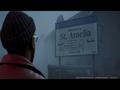
Silent Hill: Townfall follows Silent Hill f by not actually being set in the town of Silent Hill. Instead, it takes place in St. Amelia, an island town in Scotland. Players take on the role of Simon Ordell, who awakens in the water just outside town with no memory of who he is or why he's there. All he has is a bracelet bearing his name and, inexplicably, a medical IV attached to his wrist. Worse, St. Amelia is a fog-covered ghost town littered with signs of unrest and tragedy, and it has a tendency to transform into a red-tinged otherworld filled with monsters. Simon must discover how he got there and uncover St. Amelia's secrets before he succumbs to its dangerous legacy.
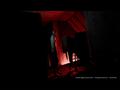
For the most part, Townfall does a good job creating an atmospheric, unsettling environment. Rather than the rusted metal and explicit gore of recent games, it focuses on a more visceral form of medical horror. There are plenty of mostly obscured injuries, from intubation to surgical procedures, and if you've ever undergone or been involved in medical treatment, they may be more unsettling than something overtly gory. Near the end, the game shifts toward a more corporate flavor of horror. It's still unsettling but lacks the punch of the medical imagery.
My biggest problem with Townfall's plot is that it lays on the foreshadowing far too thickly. I spent much of the game expecting a twist that never came. It gives so many details that later reveals fall flat because you were essentially told the answer hours earlier. Simon is also a bit of a dud, mostly serving as an audience for other characters to explain the game's themes while he mumbles vague apologies. He gets more interesting once he's allowed to respond to what's happening, but that takes a long time. There are multiple endings, and the game deliberately obscures what determines which one you receive, leaving some room for variety.
Unlike most games in the franchise, Townfall is entirely set in a first-person viewpoint, but it still follows the series' tendency to be slow-paced, so the perspective change doesn't fundamentally alter the experience. You also lose the dodge mechanic found in Silent Hill 2 Remake and Silent Hill f, but I don't consider that to be a significant loss. Without it, Simon feels more vulnerable, and vulnerability is clearly one of the game's goals.
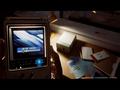
The bigger departure is that Townfall, especially early on, rewards stealth more than combat. The creatures roaming St. Amelia are brutal but relatively deaf and blind, making them possible to sneak around. Simon's portable TV makes this even easier. This old-school device can scan different frequencies, with nearby monsters appearing on the corresponding channel. Once you tune into a monster's frequency, you can track it on the TV as long as you point the device in its direction. It even detects monsters through walls and other obstacles, but you can only track one at a time, forcing you to switch frequencies as needed.
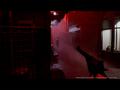
A few sections put you in control of other characters with their own gimmicks, including one with a pager that darkens around the edges to indicate a nearby monster. These segments are brief but provide some welcome variety.
The stealth is perfectly serviceable but rarely distinctive. You can hide behind objects, throw bricks and glass bottles to lure enemies away, and duck into closets or lock doors behind you to escape pursuers. Early on, these encounters function almost like puzzles in that you're given a route and a monster, and there's often a clever way through. For example, you might turn on a radio to draw a creature away, sneak past it, and lock a door behind you.
When escape isn't an option, combat is available. Simon has a standard arsenal, including a pistol, shotgun, flare gun, and melee weapon. Resources are limited, particularly early on. Melee weapons break quickly, and you'll probably find around 40 pistol rounds over the entire game, with even less ammunition for the shotgun and flare gun. Weapons are effective, but even though a pistol can usually kill a monster in two or three shots, combat is very much an emergency measure, especially because gunshots attract nearby enemies.
Unfortunately, the stealth gameplay wears out its welcome well before the end. There simply isn't enough variety, with only a few enemy types and just one that meaningfully changes how you play. That particular enemy is especially annoying: It can't be killed, instantly kills Simon on contact, and has a habit of standing directly in your path, forcing you to wait for it to move. By that point, I wasn't scared when it appeared; I was bored. You can speed things up by distracting it with a brick or flare, but doing so wastes valuable resources.
The game also starts breaking its own rules. Eventually, enemies appear who aren't detected by the TV, and their presence is poorly signposted, leading to several hits that feel cheap. Once you know to expect them, it's not a major problem, and the rule-breaking does produce a couple of effective scares, but it's still mildly frustrating.
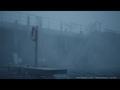
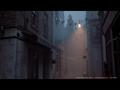
Townfall seems somewhat aware that its stealth mechanics are wearing thin. As the game progresses, it increasingly encourages you to either run past enemies and take a hit or simply kill anything that becomes too troublesome. The creatures are frightening early on but increasingly tedious later, and the boss fight feels as though it wandered in from another game. There's even a bizarrely action-heavy sequence where you get a shotgun and a huge supply of ammunition. A hard mode adds further challenges, including enemies that can detect your flashlight, but that sounds more tedious than compelling.
Meanwhile, the puzzles are largely quite fun. They tend to be oddly mundane, such as determining medication dosages by scouring nearby files and notes, but they provide enough brain-teasing to stay interesting. I don't want to spoil the solutions, but I broke out a notepad more than once to keep track of information. That becomes even more useful if you disable hints, which otherwise highlight important clues. A few puzzles are overly obtuse, though. One late-game sequence involving numbers and symbols felt less like solving a puzzle and more like guessing what the developers were thinking.
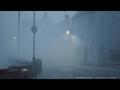
Visually, I have few complaints about Townfall. St. Amelia is a gorgeous place to explore, with a strong sense of place. It feels like a real small town, while the environmental details gradually make it feel increasingly strange and otherworldly. There are moments when the game's budget can't quite match its ambitions, particularly a late-game sequence set in a dangerous industrial facility that can't sell the scale implied by the story. For the most part, though, it looks great. The music doesn't quite live up to the franchise's standards but remains effective, and the voice acting is similarly strong and provides some much-needed atmosphere.
Silent Hill: Townfall is a solid Silent Hill-flavored game held back mainly by being too obvious and too slow. When it hits, it hits hard, and some moments are genuinely compelling. At the same time, it occasionally stretches beyond what its mechanics can support, and the gameplay barely holds together across its roughly 10-hour runtime. It's a more consistent game than Silent Hill f, but it's also a less ambitious one, which is both a strength and a limitation. Fans of the franchise will find plenty to like, particularly those who disliked Silent Hill f's Soulslike combat and more extravagant atmosphere. For them, Townfall offers a return to form.
Score: 8.0/10
More articles about Silent Hill: Townfall