




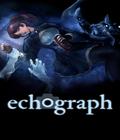






If there is a genre that defined what the PlayStation had to offer, it is horror. It isn't the first platform to offer horror games, but titles like Resident Evil and Silent Hill made the genre prevalent enough that it gained popularity with the masses. Echograph borrows heavily from that era of horror, and we checked out the demo before its public debut.
You play the role of Layla, a woman who suffered the loss of her whole family as a child while she was living at the familial estate, Calder Manor. That's when she learned that there's a curse on her family bloodline. Layla has grown up, and she's expecting a child of her own, so she musters up the courage to return to Calder Manor. She must discover the source of the curse and stop it so the next generation doesn't have to suffer.
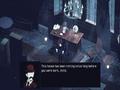
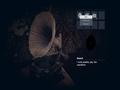
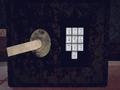
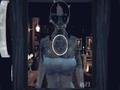
As alluded to earlier, Echograph aims for the classic PlayStation aesthetic in a few ways. The game is smothered in low-resolution textures that look grimier due to the presence of color banding and lack of general anti-aliasing. The characters have some roundness to them to hide the lower polygon count. The transparent elements can look a bit rough, which gives the game even more authenticity as an original PlayStation-like title. The game moves around at 60fps at all times, but the resolution doesn't go beyond 1080p. That may be intentional, as going higher can clean up the effects more than intended.
At the same time, the game veers away from that aesthetic in some unexpected ways. The most obvious is in some of the cut scenes, which feature fewer colors and simpler illustrations than PlayStation games, so they look like they were inspired more by early MS-DOS games. It's jarring but also artistically arresting. The lack of voices also diverges from what's expected in a game that's trying to emulate an era when most games tried to cram in as many voices as possible, regardless of quality. Again, it's an interesting choice but a welcome one.
The game takes a good chunk of its design cues from the old Resident Evil titles. You can only save in specific rooms, and there's a chest to store all of your items; it's essential when you realize that you can only hold eight things at a time. Puzzles are offbeat, such as using a glass eye to unlock a door. There's loads of backtracking needed, and there's a health system represented via a heartbeat meter instead of something more traditional.
The design takes that classic base and modernizes it in sensible ways. Saving doesn't require extra items to be consumed. The camera in the world can be rotated. Items and doors that can be interacted with have indicators, so you aren't going around an area and spamming the action button. The game map also highlights areas that still have mysteries to be solved, so you can keep track of what you need to do now or in the future. The improvements fit more into quality-of-life changes that make things bearable but not necessarily easier.
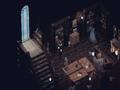
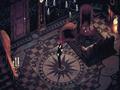
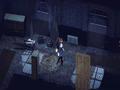
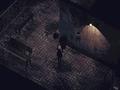
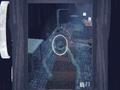
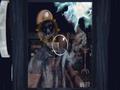
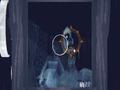
The main hook is in the game's use of a camera, which instantly reminds players of Koei Tecmo's famous horror series, Fatal Frame. Your main antagonists are ghosts, and an old camera that you acquire can weaken and ultimately dispel any specters in range. The effectiveness of the camera depends on several factors, including focus and range, but most of that is distilled into a colored crosshair system that lets you know when it is the perfect time to snap a photo. You can ultimately power up the camera to do things like affect multiple ghosts with one shot, but the camera's weakness comes from its need for film. As in any good survival-horror game, film is in limited supply, so you have to be efficient and know when running away is better than clearing out a room.
What you essentially have is a western "demake" of the Fatal Frame games combined with classic Resident Evil sensibilities, and the combination works thanks to the puzzles and subsequent imagery. The Fatal Frame similarities are best exemplified with a puzzle that requires you to put together a hand, so you must find all of the necessary fingers. That includes retrieving a finger from a gravesite and trying to grab a finger stuck in a drinking glass. For the Resident Evil parallels, cut scenes show off things like a ghost nailed to a crucifix with its jaw split open. There are ghosts that dash around erratically when you're trying to banish them. What you don't have so far is lots of gore, which is good since the scenes are amplified with the viscera missing. The rest of the game can be different when the full version releases.
If the demo is anything to go by, Echograph is going to be a treat for horror fans. The classic viewpoint combined with some quality-of-life features like a movable camera makes this feel more approachable for everyone. The use of the camera as your main weapon remains novel, since it ensures that every ghost fight remains tense, while the house and its puzzles do a good job of being eerie mazes. The retro aesthetics give Echograph some character, and we can't wait to see what the full game has in store when it releases, possibly sometime in 2027.
More articles about Echograph