






 Star Wars Zero Company is a single-player turn-based tactics game where you command an elite squad through a gritty and authentic story set during the twilight of the Clone Wars.
When Star Wars: Zero Company was announced months ago, I had a reaction I suspect wasn't unique. I'm a big fan of turn-based strategy, but I worried Zero Company was simply the result of someone demanding a genre game set in the Star Wars universe. As it turns out, developer Bit Reactor has several Firaxis veterans on its team who wanted to apply their XCOM experience to a new game and push the genre forward. That immediately caught my attention, and more surprisingly, Zero Company may have set some new benchmarks for the genre.
Zero Company is set during the Clone Wars, as the Separatists wage war against the Republic with their droid army assaulting and capturing planet after planet. You play as Hawks, a former Republic army officer and sole survivor of a mission gone horribly wrong. After leaving the army, Hawks forms Zero Company, a mercenary unit that takes jobs from anyone willing to pay. The Republic eventually approaches the company with an intriguing contract. A cult known as the Infinite Coil has been helping the Separatists soften up planets ahead of invasion, and with Republic forces already stretched thin, they need Zero Company to investigate the cult and put a stop to its operation.
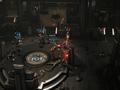
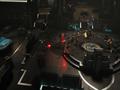
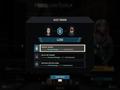
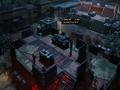


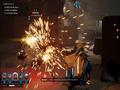
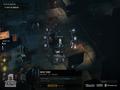
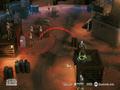
At a high level, Zero Company follows the formula established by the modern XCOM games. Tactical combat is turn-based, with each unit having a set number of action points (AP) to spend on movement and other actions. Once you end your turn, the enemy takes theirs before the cycle repeats. Outside combat, you return to your base to improve it, upgrade units, and acquire new equipment.
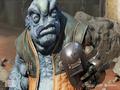
However, Zero Company distinguishes itself in several ways, often pushing the genre forward. Your units, or "operators" as the game calls them, have unique names, backstories, and voice work. A handful are more fully fleshed out, with deeper storylines and companion quests that further develop their characters. Several other recruitable operators have their own voices, mannerisms, and backgrounds that persist throughout the game.
This makes your operators feel less like randomly named soldiers and more like RPG party members. Because they're presented as actual characters, it's also easier to become attached to them. This can make it particularly painful to lose one in combat if you activate permadeath. Fortunately, that's difficult to do: A unit must be downed three times before it dies, and injuries can be cleared by giving operators downtime to recover between missions.
Operators can also form bonds with one another, measured across several tiers that can rise or fall based on their actions. Using a stim on another operator or fighting alongside them can strengthen their bond. At lower levels, bonded operators may trash-talk each other during missions; as their bond grows, that can turn into compliments after a well-placed shot, making the system feel surprisingly believable. Reaching a new bond level lets you choose one of three permanent buffs for both operators, including increased health, ranged accuracy, movement range, or additional Focus points.

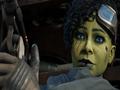
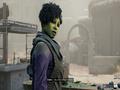
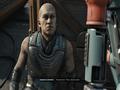
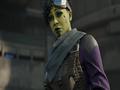
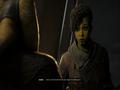

The bond system adds another layer of strategy. Operators who regularly fight together will naturally accumulate more upgrades, but you can also pair less-used operators with a particular character to build up their bond. Since I sent Hawks on nearly every mission, they accumulated the most bond upgrades and became noticeably more powerful than the other operators. It's an organic system that can also be deliberately leveraged to strengthen specific characters.
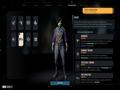
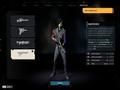
Focus points are the primary way to improve an operator and can be spent across skill lines based on their background and specializations. The game has eight specializations, essentially its classes, each with its own abilities that can be upgraded using Focus points. Higher tiers cost more points but make abilities significantly more powerful. Focus points can be completely reset and reallocated at any time, so you're never stuck with a bad build. You can also change the specialization of minor operators you recruit, while every operator can eventually gain a second specialization.
Regardless of specialization, operators can use any of the game's four ranged weapon types: blaster pistols, blaster rifles, longarms (sniper rifles), and repeaters (machine guns). Weapons can be swapped between missions, and each has distinct strengths and weaknesses. Blaster pistols deal the least damage but always cost one AP to fire. Blaster rifles cost one AP for the first shot and two for the second, using all three AP an operator starts with each turn. Longarms always cost two AP but offer the longest range. Some specializations naturally favor certain weapons, but the game never locks you into a particular combination, allowing you to experiment freely.
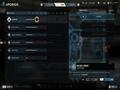
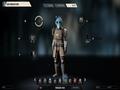
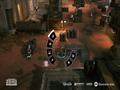
The Den is your base of operations, where you can walk around as your custom-made Hawks. Between missions, operators hang out there, allowing you to talk with them or overhear their conversations. The med bay lets you heal injured operators for a small credit fee, the recruiting terminal lets you recruit additional operators, and the upgrade terminal lets you spend credits on permanent upgrades for your base and units. These can increase the number of beds in the med bay, let off-duty operators build bonds while relaxing, or increase the movement range of operators using blaster pistols. Credits are rarely abundant, so deciding where to spend them is important.
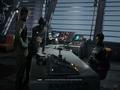
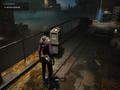
The Holomap is where you track your reputation across the game's various zones, plan operations, and undertake missions. Operations are simpler, mostly non-interactive events that require intel points to initiate. You receive a set amount of intel at the start of each in-game "cycle." Some operations reveal their rewards upfront, while others make you choose between a series of unknown outcomes. Some require you to send operators and may risk injuring them. Others can appear after conversations with operators and serve as companion quests that unlock character-specific missions.
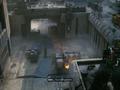
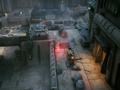
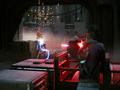
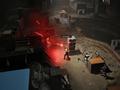
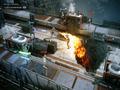
Missions are the game's interactive, turn-based tactical encounters. You can send up to four operators at a time. Regular missions are effectively randomly generated and aren't tied directly to the main story, but they provide credits, weapon upgrades, utility items, and other rewards while increasing the reputation of the zone where they take place. Story missions, whether part of the main campaign or a companion quest, are more elaborate, often featuring pre-mission briefings, in-mission cinematics, and multiple maps. Operators thankfully start each story mission at full health with their utility items available, so you don't have to worry about managing resources across an unknown number of consecutive encounters.
Every operation and mission has a limited number of cycles before it expires permanently. Some start with three or four cycles, but others can appear with only one, forcing you to complete them immediately. While I understand the narrative reasoning — Zero Company needs to act before an opportunity disappears — the system can create frustrating logjams where several activities expire at once. It becomes even more problematic when Coil Crisis operations or missions suddenly appear with only one cycle remaining, forcing you to choose between them.
Coil Crisis missions each offer a permanent upgrade that the Infinite Coil is pursuing, but you can only stop one. At one point, I had two companion missions available, one expiring in a cycle and another in two, when a two-mission Coil Crisis appeared without warning. One companion mission was essentially "go to this guy's base and take him out," making its extremely short time limit feel especially arbitrary. Rather than permanently miss either companion mission, I ignored both Coil Crisis missions, allowing the Coil to acquire two powerful upgrades. The game would benefit from giving these activities more breathing room. Story missions in particular could have longer timers, or some missions could simply lose their expiration limits when a deadline doesn't make sense narratively.
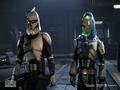

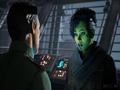

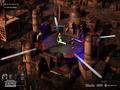
Even with those frustrations, the system is compelling. It keeps the story moving forward while controlling the pace at which you encounter larger and more powerful groups of enemies. Some story missions feature incredible set pieces, complete with in-game cinematics, special victory conditions, and guest operators you can control. At one point, my squad ran down a dry dock while droid aircraft strafed sections of the map, instantly killing any unit caught in them. As much as I would have preferred more breathing room between missions, I appreciate that the game prevents you from simply farming a dozen regular missions. The story and world always feel like they're moving forward from cycle to cycle.
I've mentioned cinematics and cut scenes several times, but Zero Company's use of them deserves special praise. The game is heavily story-driven, and its cinematics flesh out both the operators and the broader narrative without making the game feel like a movie interrupted by occasional gameplay. Every character is well written and fully voiced, making them feel like more than names on a spreadsheet. The Clone Wars setting also gives the game room to embrace its own "war within the war" and tell a story that isn't constrained by the larger Star Wars saga. At one point, my preview build stopped working before I received the review build, and I was genuinely eager to get back in and see where the story went next.
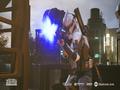
I'm also glad Zero Company is deliberate about when and where it uses Jedi and the Force. You can recruit a Padawan, but she's no more powerful than your other operators, and her Force abilities are primarily used to reposition enemies rather than unleash overwhelming powers. The story focuses more on intrigue and blaster fire, which makes the first appearance of a lightsaber feel genuinely special. While the plot eventually intersects with the Skywalker saga, I'm glad Zero Company tells its own story and merely happens to cross paths with familiar characters rather than dumping a collection of famous faces into the narrative.
Ultimately, Zero Company is a great turn-based strategy game that happens to be set in the Star Wars universe. It never feels like a corporate mandate to make a genre game with a recognizable license. Instead, it feels like a group of talented developers genuinely wanted to explore what the genre could do and had the freedom to experiment. Those ideas succeed far more often than they stumble, and the game's excellent use of the Clone Wars setting makes Zero Company one of the most entertaining turn-based strategy games I've played in a long time.
Score: 9.6/10
Reviewed on: AMD Ryzen 7 7800X3D, 32 GB RAM, NVidia RTX 4070 Ti




More articles about Star Wars Zero Company