








 A prequel set 15 years before the events occurring in A Plague Tale series, Resonance: A Plague Tale Legacy lets you dive into an original story blending combat, myth and fate with a brand new take on the universe.
Prequels are always a tricky proposition. If you've played, read, or watched the entry they precede, you already know how the story ends when characters reappear, thus diminishing the intrigue. Their appeal often comes from expanding on details that were previously mentioned only in passing or exploring an intriguing supporting character. Resonance: A Plague Tale Legacy takes the latter approach by focusing on Sophia, the plunderer captain from A Plague Tale: Requiem, and the result is different from its predecessors in a very good way.
Sophia's story begins with tragedy. Abandoned at a convent as a child, she was subjected to experiments that gave her visions of an island in the past. Her father eventually rescued her and brought her into his bandit gang, only to die on the same island she had seen in her visions. Sophia grew into a capable member of the gang, but the visions never stopped. After a job in Venice went wrong and nearly destroyed her found family, she decided to confront the source of her visions by traveling to the island of the Minotaur.

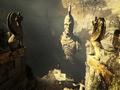
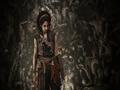
Storytelling has always been one of the series' strengths. Both previous games delivered twists that made sense while balancing their constant tragedies with small victories, all supported by believable, well-developed characters. This entry continues that tradition. Sophia makes an excellent protagonist, while her companions and enemies are equally well fleshed out.
The story introduces a time-warping mechanic that shifts to Theseus' perspective in ancient Greece as he attempts to face the Minotaur. Rather than feeling like an unnecessary diversion, these sections enhance Sophia's story. They effectively replace the constant environmental shifts of the previous games and keep the adventure focused. The time shifts also let the game expand the series' world and mythology. You already know Sophia survives, but her journey remains fascinating and works well as a stand-alone story, even if its opening and conclusion clearly position it as a story best experienced after the second game.
As in previous entries, exploration and platforming are major components. Although the game remains linear and divided into chapters, each area contains plenty of paths worth exploring. You can jump across chasms, crawl beneath beams, squeeze through narrow spaces, and rappel up or down walls and cliffs with a new grappling hook. The hook can also pull down certain fragile barricades.
Exploration rewards you with charms that improve defensive abilities, such as reducing the chance of being hit by an arrow after failing to dodge. Resonance points unlock offensive techniques, including the ability to throw one enemy into another during a dodge. These rewards give exploration a meaningful purpose beyond simply finding collectibles.

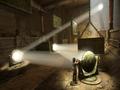
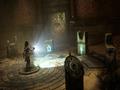
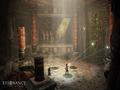
Puzzles have always been important to the series, and Resonance puts an even greater emphasis on them. Familiar switch-based puzzles return alongside a book that tracks landmarks and symbols to guide you. Most importantly, many puzzles revolve around light. Some require lenses to direct beams toward switches or clear blockades, while others let you split light into three primary colors and adjust their angles to hit multiple switches simultaneously.
Fortunately, the series' approach to puzzle design remains intact. Solutions are clever and occasionally satisfying enough to feel like major accomplishments, but they never rely on blind luck or obscure logic.
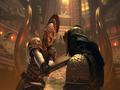
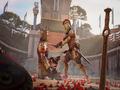
Combat is the biggest departure from the previous games. Sophia fights with a sword-and-dagger combination built around speed rather than heavy attacks, although a charged stab delivers a powerful blow. She can kick enemies backward, sometimes sending them into holes or chasms, while the grappling hook can pull foes toward her. Environmental items such as knives and bottles can be thrown to stun enemies.
Defensively, Sophia can dodge, block, and parry. A successful parry can stun an enemy, creating an opening for additional attacks. Various swords found throughout the game provide combat bonuses, such as a larger dodge window or the ability to cause bleeding with a full combo.
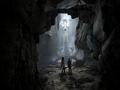
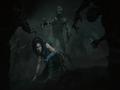
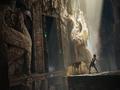
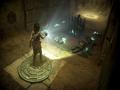
The simplest comparison is Batman: Arkham combat with a touch of Assassin's Creed. Fights take place in designated areas and usually involve groups of enemies, while boss battles are one-on-one. The fast-paced system naturally moves Sophia between targets, but there is no lock-on mechanic. Although parrying is useful, you can also attack blocking enemies directly to force them into a stun.
One particularly interesting change is the lack of healing items. The only way to recover health is by killing enemies, with each kill restoring a substantial portion of the health meter. At a time when many action games emphasize precision counters, Resonance's faster, more aggressive combat is refreshing. More importantly, it feels good and controls well.
Stealth remains, but it has been drastically reduced. There are no hiding spots, distractions, or dedicated stealth kills, and enemies detect Sophia almost immediately. Instead, stealth becomes relevant primarily in the second half, where it mostly involves crouch-walking and staying behind walls to avoid leaving a trail. The system is basic but effective, particularly when dealing with one of the game's major twists. Without spoiling it, that sequence helps restore the suspense and horror that the first two games created through their rat hordes.
Despite the changes, Resonance consistently feels fair. Its AI companions never create unnecessary problems; they don't put themselves in situations where they can die, they can hold their own in combat, and the game ensures they deliver the final blow so you're not forced to defeat every enemy yourself.



The previous game's variable difficulty settings return, including an option that prevents enemy attacks from killing you. As a result, the game accommodates players seeking a challenge while doing everything possible to ensure everyone can experience the ending.
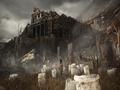
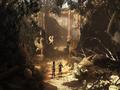
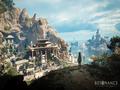
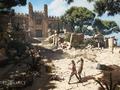
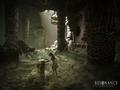
Graphically, Resonance looks as good as its predecessors, even without their enormous rat hordes. Glowing dust takes the rats' place as an important visual and gameplay element during the second half. It also enhances environments that are otherwise beautiful, although some textures are lower resolution than expected. Character models are particularly impressive, with convincing facial expressions, mouth movements, and animations. You'll need fairly powerful hardware for high resolutions and frame rates, but there is little else to criticize visually.
The series has also consistently delivered excellent sound, and this entry is no exception. The soundtrack mixes exciting and melancholy compositions that effectively reinforce each scene's emotion. There are more vocal tracks than before, sung in Italian or Greek, and they are a welcome addition. The voice cast performs the material convincingly, giving the excellent script the appropriate emotional weight. It can still be jarring to hear an ostensibly Italian army speaking British-accented English, particularly when they suddenly use Italian phrases such as "Si, Capo," but it's a minor issue.
The game runs on Linux, but there are some issues. On a SteamOS system equipped with high-end AMD hardware, full camera rotations produced uneven frame pacing, particularly on the Ultra preset with FSR enabled. The issue was less pronounced on High or Medium without FSR and disappeared entirely when motion blur was disabled.

There was also a crash during a chase sequence in the second half. A system running Bazzite with an RTX 4090 avoided that particular issue, but the card's high fan speeds made headphones practically necessary. Several crashes occurred in the latter portion of the game, seemingly when loading areas with dramatic changes in lighting and particle effects. They were more frequent on a Radeon 9070 XT at 4K than on an RTX 4080 at 1440p ultrawide. A future patch or newer Proton version could resolve these problems, but the game remains playable.
The Steam Deck fares about as well as expected given the game's demanding nature and the performance of A Plague Tale: Requiem at launch. The game defaults to a combination of the Low preset, FSR, and FSR frame generation at 1280x800. Even with those settings, performance hovers around 25 fps and rarely feels smooth, including during lighter scenes. On the Steam Deck LCD, a full charge lasts roughly 90 minutes, making this an especially demanding game for the portable system.
Resonance: A Plague Tale Legacy is a very good addition to the series, provided you don't mind how much it differs from its predecessors. Exploration is rewarding, particularly with the new grappling hook, while the puzzles remain clever without becoming obtuse. Stealth has been heavily reduced, but the expanded combat more than makes up for it, creating an experience that feels faster and more satisfying. As before, though, the story is the real star. It's exciting and gut-wrenching even when you already know its ultimate outcome. Series fans should find plenty to enjoy, while adventure game fans have another compelling reason to give it a look.
Score: 8.5/10

More articles about Resonance: A Plague Tale Legacy