







 The Blood Of Dawnwalker is a single-player open-world dark fantasy action/RPG with a strong focus on story and narrative.
The Blood of Dawnwalker is set in 14th-century Europe during the height of the Black Plague, in the fictional valley of Veil Sangora. The valley has been spared the plague by the "grace" of its new rulers: a cadre of vampire lords who slaughtered the previous leadership and now offer protection in exchange for absolute control. Players take on the role of Coen, a young farmboy who becomes involved in a rebellion against the vampires. When the rebellion is violently crushed, Coen is turned by the vampires' leader. Rather than becoming a full vampire, however, he becomes something in between: the titular Dawnwalker. Human by day and vampire by night, he must use his newfound powers to rescue his family before they are sacrificed in an arcane ritual on the next full moon.
By and large, Dawnwalker tells a compelling story. Once Coen's transformation is complete, you're free to explore Veil Sangora and uncover its secrets, which range from the mundane to the deeply supernatural. The open-ended narrative lets you decide what interests you most, whether that's investigating the supernatural forces at work or getting involved in human politics. Either way, the story has plenty of heart.

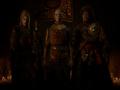
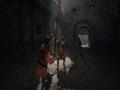
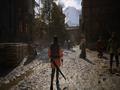
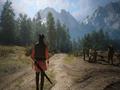
More importantly, Dawnwalker rarely imposes a morality on your decisions. Choices aren't generally labeled as good or evil, and characters frequently ask you to prioritize the ends over the means without making the alternatives cartoonishly villainous. The game mostly presents your decisions and reflects their consequences rather than funneling you toward predetermined good and bad paths. It makes the experience feel less like navigating a morality system and more like crafting your own story.
My biggest complaint is the ending. You get a satisfying overview of what happens to the land and its people based on your actions, but Coen's personal story is pushed toward a specific plot that feels designed to set up a sequel. It's not disastrous, and I appreciated seeing the consequences of my decisions, but for a new IP, I would've preferred a more self-contained conclusion rather than one that assumes another game will eventually arrive.
The most important system in Dawnwalker is its 30-day time limit. You have until the end of those 30 days to save your family, and the game is deliberately designed so you can't experience everything in a single playthrough. You have to decide what's worth doing.
Fortunately, this isn't a real-time countdown. Exploring, fighting, crafting and wandering don't advance the clock. Instead, certain activities consume chunks of time, such as quests, conversations, training and other commitments. As the clock advances, day turns to night and eventually back again, with certain activities available only during particular periods. The result is closer to Persona than a traditional time limit. You can freely explore without watching the clock tick down, but committing to something means giving up time that could have been spent elsewhere.
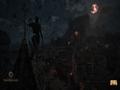
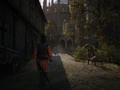


That creates a constant series of interesting decisions. You might hear about a magical sword that's capable of killing the head vampire. Is it worth tracking down? Should you instead raid vampire camps to lure out one of his lieutenants? Is helping the rebels more important than befriending the strange goat people living in the mountains?
I loved this system. I can see it stressing out some players, and its impact probably diminishes once you understand how the clock works, but it made every decision feel meaningful. Was it worth spending an hour connecting with a friend? Should I help a character I liked or stay focused on my family? I was constantly weighing whether something was worth my time.
That freedom is what makes the system work. I frequently wandered toward whatever looked interesting and stumbled into surprisingly elaborate stories. One side-quest introduced me to a vampire hiding from the ruling leadership. Another led me to a haunted covenant, revealed a dark secret about a close ally, and eventually sent me through ancient ruins in search of a magical fountain of youth. The clock was always present, but it never felt overwhelming. I still had enough time to explore and open multiple paths toward the final confrontations.
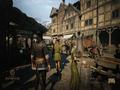
The passage of time also determines how Coen plays. During the day, he remains human and gains access to Witchcraft, which provides powerful attacks and abilities while allowing him to harvest additional materials and craft potions. His human form also makes it easier to blend into society.

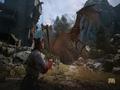
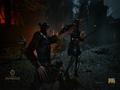
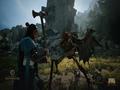
At night, Coen transforms into a vampire. He's significantly stronger, with a larger health pool, claws that can replace his melee weapon, teleportation, blood-draining attacks and other vampiric abilities. Most importantly, he can climb walls and teleport to elevated locations, opening up much more of the world, particularly rooftops and mountains. Additional abilities can be unlocked by drinking blood and building his Corruption meter.
The vampire form comes with risks. Health is harder to recover, particularly early on, since Coen must feed on living creatures or use limited healing items, such as vials of human blood. More dangerous is hunger. When Coen falls to one health bar or less in vampire form, he can lose control when speaking to a living character and murder them mid-conversation.
That can happen to anyone, from random quest-givers to major characters, potentially failing quests or radically changing their outcomes. In practice, however, hunger is easy to avoid. Keeping your health topped off prevents it, and quicksaving and reloading can undo the consequences entirely. The same is true of many of Dawnwalker's choices: The game clearly expects you to accept what happens rather than reload after every decision, but players willing to do so can largely neutralize the consequences. Deliberately allowing Coen's hunger to consume a major character (or a potential love interest!) could create some fascinating alternate stories for players who are willing to see them through.
That freedom is ultimately Dawnwalker's greatest strength. Sometimes you'll waste time because you made the wrong choice. Sometimes you'll waste it deliberately because you wanted to go drinking with a friend, pursue a romance or investigate a bizarre mystery. Most quests offer multiple ways forward, not because one is necessarily correct, but because the game trusts you to decide what Coen would actually do.




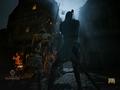
Combat is built around directional attacks and defensive timing. Coen can perform an "Omni-Attack," freely swinging his sword at the cost of stamina, or hold a direction to perform a stronger directional slash. Later, Critical slashes reward precise directional inputs with even more damage.
Blocking works similarly. An omniblock stops incoming attacks but drains stamina, while blocking in the direction of an incoming attack performs a precision block without consuming stamina. Time it immediately before impact and you get a perfect block, staggering the enemy and opening them up to follow-up attacks. Get the timing wrong, and you take the full hit.
This creates an enjoyable rhythm of blocking, parrying and counterattacking. Successful defenses also build a resource used for special attacks, ranging from advanced sword techniques to magic and Coen's vampiric abilities. In vampire form, you can also replace your sword with claws, which are stronger but less customizable.
The problem is that combat gets repetitive. It's somewhat reminiscent of The Witcher 3, but while it has enough complexity to prevent mindless button-mashing, it isn't deep enough to remain compelling after dozens of hours. Enemies can also become damage sponges, particularly in the midgame before you unlock some of the more powerful abilities. Duelist difficulty makes both you and your enemies more lethal, but ordinary enemies still become tedious once you've seen most of the major types. Bosses provide more variety, but they're relatively infrequent.

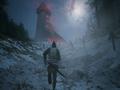
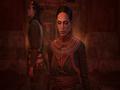
The game also becomes surprisingly easy. By the end, I was regenerating so much health that healing items were practically irrelevant, and my damage output was high enough to melt bosses. Higher difficulties help, but enough min-maxing can make Coen extremely powerful without engaging with the game's many potions and other combat systems. If you're looking for a challenge, I'd recommend starting on Duelist. I just wish the combat demanded more from players late in the game.
Exploration is a mixed bag. Movement is reminiscent of The Witcher 3, with basic climbing and high-speed movement during the day. At night, Coen gains freeform climbing, teleportation and the ability to transform into a wolf for faster travel.
Night travel can be fantastic. Zipping across rooftops and teleporting between high points makes Coen feel genuinely superpowered, and the additional freedom changes how you interact with the world. Unfortunately, climbing becomes janky outside areas clearly designed for it. Coen can get stuck on small outcroppings or run into invisible walls, making rougher mountain terrain frustrating to navigate. It rarely interferes with intended routes, but it discouraged me from experimenting with unconventional paths.
The world itself is much more successful. Veil Sangora isn't enormous, but it's densely packed with things to discover: monster dens, hidden puzzles, vampiric schemes, treasures, inns and more. Exploration can even advance major storylines. For example, an early cave that I stumbled across initiated a questline involving a magical sword and introduced me to several important characters and surprisingly elaborate plots.

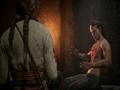

Visually, Dawnwalker is a little uneven. Character animations are strong, and the art direction does a good job of establishing the game's gothic aesthetic, but I encountered plenty of visual bugs and awkward cut scenes. In one particularly noticeable example, a special effect failed to appear, leaving Coen staring at what should have been dripping blood that wasn't actually there. Performance was reasonably smooth, though our test of Balanced mode ran below 60fps; a Performance mode is expected at launch to improve that. None of these issues ruined the experience, but they make the game feel less polished than its strongest moments suggest. The voice acting, meanwhile, is excellent. The performances do a lot to sell the characters and elevate the script, with Will de Renzy-Martin's performance as Coen standing out in particular.
There are some obvious flaws. Combat becomes repetitive and too easy, exploration can be awkward, the visuals aren't always as polished as they should be, and the time limit may frustrate players who dislike irreversible choices. That said, I remained invested throughout my entire playthrough, which says a lot about how well the game's systems work together.
In a month packed with big-name releases, The Blood of Dawnwalker might be one of the best games of the bunch. It's a well-crafted adventure with an engaging story, an enjoyable world, interesting powers and a genuinely compelling approach to player choice. The time limit gives every decision weight. The open-ended storytelling makes exploration meaningful. The day/night system gives Coen two distinct ways to interact with the world. Most importantly, the game trusts you to make choices without constantly telling you whether you've made the "right" one.
Score: 8.5/10
More articles about The Blood Of Dawnwalker