

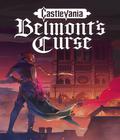






The last time the main Castlevania timeline had a new Belmont protagonist was in 2003. Sure, Julius Belmont showed up in Aria of Sorrow, and Gabriel Belmont was the star of Lords of Shadow, but there hasn't been a new frontline Belmont since Lament of Innocence's Leon Belmont. The franchise was in a bit of a dormancy, and it seemed like the only Belmont adventures we might get were in the Netflix animated adaptation. That is why Castlevania: Belmont's Curse was such a welcome surprise. It's a brand-new entry in the franchise, and it brings back the whip-wielding heroes for the first time in decades. Thankfully, it's also a darn fun game on its own merits, even on the relatively weak Switch.
Belmont's Curse opens roughly 20 years after Castlevania 3. Dracula was defeated by Trevor Belmont and his allies, but their victory took a toll on the heroes. Dracula's defeat left Sypha Belnades with a lethal curse, and she died shortly after giving birth to her and Trevor's child, Rose. Now an adult and dealing with the lingering effects of the curse, Rose and her father are called to Paris to stop a series of monster attacks. It becomes clear that these random attacks are the work of Dracula's minions, who are trying to revive their vanquished master. Rose must overcome her own curse and stop the evil plans of Dracula's minions before her mother's sacrifice is rendered meaningless.
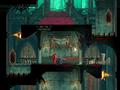
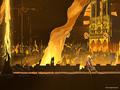
Belmont's Curse is probably the most plot-heavy Castlevania game. It's based on the older games and full of deep cuts and references that only the most dedicated fans will notice. At times, it borrows from the Netflix anime presentation and aesthetic, but it notably avoids adapting any of the plot elements. This is very much a sequel to Castlevania 3 and the PS2-era 3D games before all else.
My only real criticism is the inclusion of Brauner (an ancestor of Portrait of Ruin's primary antagonist), which felt distracting given the game's otherwise strong ties to the older entries. I also wish Grant DeNasty had made an appearance, especially given how much the game draws from Castlevania 3. Then again, I suppose it's only fitting that the most overlooked member of that game's cast would be overlooked once again.
Rose is a pretty likable character. She's basically collecting the villains she beats in tarot cards, like some kind of demonic Pokémon, so she has an entourage of characters who exist to give her someone to talk to and bounce her thoughts off of. The primary three — The Fallen (a corrupted vampire hunter), Joan of Arc and Medusa — form a nice little chorus. There isn't a super in-depth plot; it's a story about a vampire killer stopping Dracula, but it's a fun romp.
Belmont's Curse exists in a midpoint between the Metroidvania and classic-style Castlevania games. It's a Metroidvania with multiple large areas to explore, secrets you'll need to find by returning with new abilities, hidden paths and secrets, and more. It has a notably heavier emphasis on platforming and combat difficulty than the Metroidvania-style Castlevanias usually do. It's not quite NES-difficult, but it's far more in line with the kind of difficulty you see in modern Metroidvania-style games like Silksong, with lots of dangerous traps and obstacle gauntlets between you and your foes.
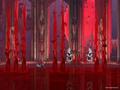

In now-classic Castlevania fashion, Rose can find and unlock new weapons throughout the game. There are seven weapon types: Fists, Greatswords, Spears, Swords, Sword and Shield, Twin Blades, and of course Whips. Each weapon class has three tiers of upgrades, with the first two upgrades giving enhanced stats and the third Legendary tier granting some kind of boon in addition to the weapon's distinct attributes. The Whip class does the most damage if you hit the enemy with the tip of the whip instead of the base. At its maximum level, the whip becomes the Vampire Killer from the Netflix anime adaptation, so hitting the sweet spot causes explosions that ignite the enemy and make foes explode upon defeat. The standard blade is an all-around good weapon, but its maximum level turns it into the iconic Valmanway, giving it an unmatched attack speed compared to other weapons.
Weapons are thus very much a case of quality over quantity. While there aren't a lot of weapons, each one has its own gimmick, and I swapped between them based on my current needs. The whip is great if you have the range to fight, but it suffers in close-quarters combat. Meanwhile, the sword and shield's ability to block incoming damage is fantastic in tight quarters or projectile-heavy fights. You can select any given weapon type that you like and use it exclusively.
In addition to weapons, Rose can unlock Arcana, which are tied to the game's bosses — and occasionally NPCs. You'll get clues about the character involved and how to find them. Once you do (in the boss's case, once you defeat them), you'll be able to gain their power. Each Arcana gives Rose a different combat skill. The Fallen allows her to throw the iconic Holy Cross weapon, while the Priestess (also known as Medusa) allows you to petrify enemies in place. These abilities use MP, which is replenished when you attack enemies, so you can easily weave them into combat.
These Arcana don't just include combat applications, though. Most of the major bosses also include a Metroidvania-style upgrade. This includes a spectral whip you can use to swing on objects and dart to enemies, a double jump, a ground slam and an air dash. Several of the Arcana also have non-combat uses, such as the Zealot's attack serving as a version of the Super Jump as long as you cancel it before the animation finishes, or the Sage allowing you to set checkpoints to make platforming challenges easier.
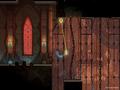
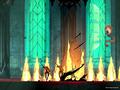
They can be further upgraded by completing certain challenges once they are unlocked. These challenges are specific to each Arcana and can vary from simply using the ability in combat to finding hidden secrets or optional areas. Once you complete a challenge, you can make an Arcana upgrade permanent. Medusa's petrifying glare can be upgraded to refund the mana used when you destroy a petrified enemy or to enhance the power and duration of the attack as you get closer to a foe.
Relics are the last type of customization, and they are items you can equip in three different relic slots. These relics grant Rose passive bonuses, ranging from making it easier to discover health to increasing the amount of MP you restore from fights. You can swap relics at any time, even during combat, which is both a plus and a minus. It means you can freely adjust any time you want, but it also means the game quietly encourages you to min-max in annoying ways, such as only equipping an item that enhances healing when you're able to heal. It's not a serious problem unless you can't resist the urge to constantly swap items, but it's worth keeping in mind.
Combat is straightforward. Things start off simple enough, with Rose being able to attack and dodge, but she quickly unlocks new moves like the aforementioned whip-grabs and the ability to parry attacks. As is the standard for modern action games, health is tied to a series of three health potions that you can replenish at save points. You can find extra health items, but they are random drops and disappear at save rooms, so they're very much a use-it-or-lose-it thing. If you've played action games in the past decade, you have a pretty good idea of the basic mechanics, but the Arcana and Weapons go a long way toward making things interesting.
Belmont's Curse is filled to the brim with secrets, unlockables and collectibles. While it doesn't have the sheer quantity of items of a Symphony of the Night, it makes up for it with pretty much everything you can find being a very significant boon. Almost every room in the castle has some kind of hidden item, ranging from relics you can equip for boosts to new weapons and items. There are puzzles to solve and even entire secret areas that you might miss entirely if you don't poke around enough.
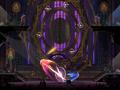
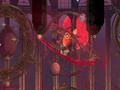
It's not unfair, but Belmont's Curse is probably the hardest Castlevania game I've ever played, and it's certainly the hardest the franchise has been since the NES days. The platforming can be rather intense, the boss fights are punishing multi-stage affairs, and the limited amount of healing and high damage numbers mean you are expected to learn and master mechanics to progress in the game. The RPG mechanics mean you can power up and get stronger, but I finished the game with almost every upgrade and around level 90, but the final boss still could wreck my day with ease if I hadn't learned how to fight.
This is what could potentially turn off fans of the franchise who are used to the more chill difficulty levels of the Symphony of the Night era of games or the largely forgiving platforming of a Super Castlevania IV or Rondo of Blood. The game offers customization options that allow you to do things like modify the damage you take from traps or enemies, the number of potions you can carry, and a few other things to reduce the punishment for failure. These aren't necessary, especially once you invest the time into unlocking Arcana and upgrades, but they're a nice feature for those who want some advantages.
Belmont's Curse has a few design choices that feel like the result of lack of polish. Backtracking can be somewhat of a chore. There are a lot of different warp points, but they are split up among multiple transportation methods and involve multiple loading screens. There are a few areas where the game seems to add extra time for no real reason other than to add time, such as time puzzles where you need to leave the room and return from another entrance to reattempt it.
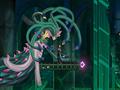
Another design choice involves boss runbacks. Lose to a boss, and you have to make your way back to the boss from the nearest saferoom. If these runbacks involved fighting through enemies and platforming, I could understand it, since that would it's important to preserve your health for the boss. Usually, it's just two or three rooms of empty space that do nothing but add 30 seconds of extra time to each attempt. Weirdly enough, the Custom feature gives you the option to reload at the boss doors instead or the safe point, which is a nice option that underlines how unimportant it is.
None of this ruins the game, but it adds small but consistent amounts of frustration to what is already a reasonably difficult game because you often have to waste small but meaningful amounts of time to return to the actual challenge. I should note that this is almost entirely tied to traversal and exploration, as the skirmishes are largely tight and lean, and there's no wasted time there. The game's boss fights are among the highlight, and they're some of the best in the franchise's history.
Belmont's Curse is a nice-looking game that borrows a lot of the aesthetic from Evil Empire's previous games and the Netflix anime. The environments are colorful and detailed, enemies are well animated and very cool, and in general, I really like how the game looks. The soundtrack is incredibly good, with a mix of atmospheric tunes and some of the classic Castlevania Bloody Tears-style music. The voice acting is also largely solid, with a pretty diverse cast who largely nail their roles, including several of the Netflix actors returning to voice their characters. They even got Liam O'Brian to voice Isaac, one of the antagonists of the PS2 games.
Castlevania: Belmont's Curse is a fantastic return for the franchise. Mixing old and new together, it feels at once like a fresh game and something distinctly and undeniably Castlevania. It does a great job of threading the needle between the many different versions of the franchise. There are some inconsistent difficulty spikes, occasional moments of meaningless friction, and the Switch port is a little lackluster. For fans of the franchise who are looking for a return to Dracula's castle, this is exactly what it should be, and it hopefully represents a new life for the immortal franchise.
Score: 8.0/10
More articles about Castlevania: Belmont's Curse