








Marvel's Spider-Man is a tough act to follow. Insomniac's iconic superhero franchise brought virtually every element of Spider-Man's long history to PlayStation in a cohesive package. Marvel's Wolverine has a harder problem: Wolverine is a far more brutal, straightforward, and fundamentally different character from Peter Parker. You can't just drop him into a wide-open city and call it a day. Marvel's Wolverine tries to capture Logan and much of his history in a single game. It isn't quite as successful as Spider-Man, but it's easily the best game the Ol' Canucklehead has ever had.
Marvel's Wolverine opens on a slightly different world. Logan is living a feral existence in the Canadian wilderness when a psychic mutant offers him a chance to join a team of mutants protecting their kind from those who would destroy them. That man isn't Charles Xavier, however, but Nathaniel Essex, better known to comic fans as Mister Sinister. That one change creates a new timeline in which Wolverine has spent decades as part of Team X, Essex's mutant-protecting black-ops squad. After a tragic accident forces Wolverine to leave the team, he's dragged back in when Essex is kidnapped by Bolivar Trask, a human-supremacist tech billionaire. What begins as a simple rescue mission quickly expands into a conspiracy involving Trask, the Hand, and a chance encounter with Jean Grey.


The plot is interesting because, even compared to Spider-Man, it goes off the rails early. This is an alternate universe with alternate versions of familiar characters, allowing the game to break expectations while retaining enough familiarity to keep things grounded. As a die-hard X-Men fan, I genuinely wasn't sure where the story would go or which characters would appear in unexpected roles. Even replacing Professor X with Mister Sinister gives the game an identity of its own. The variation on Jean Grey and Wolverine's relationship is particularly interesting and surprisingly fresh.
Unfortunately, the story can also feel disjointed. If I weren't an X-Men fan, I suspect some events would be confusing without prior knowledge of these characters. Jean Grey in particular has several odd moments that made me wonder whether she was once intended to be playable, and that content was cut. Some of her plotlines feel unfinished, and a few action sequences seem to be missing connective scenes. It's still a fun adventure, but it feels like more was left on the cutting-room floor than in Peter and Miles' admittedly overstuffed adventures.
As you'd expect, Wolverine is a brawler. He's the best at what he does, and what he does isn't very nice. Combat is a familiar third-person melee beat-'em-up, and you can parry attacks, dodge red-tinted unblockables, and unlock moves that break blocks or launch enemies. Anyone familiar with this genre over the past decade will feel at home immediately.
The game's best combat idea is that Wolverine is supposed to get hurt and get hurt often. His healing factor gradually restores lost health, while brutal finishers on stunned enemies provide another way to recover. Later abilities even let you turn Wolverine's injuries into weapons, such as pulling an enemy's sword from his own back and using it against them. Wolverine's damage model reinforces the idea: He becomes increasingly bloodied and torn up as fights progress, making every encounter look like he's been through a thresher.

The more important mechanic is Rage. Dealing damage builds a three-level meter. At level two, finishers become more powerful and Wolverine gains additional bonuses. More importantly, he effectively can't die while in this state. Being downed gets him back on his feet while resetting Rage and temporarily preventing him from rebuilding it.
Level three turns Wolverine into a full berserker. The world fades to black and white, enemies are highlighted in red, and Wolverine becomes faster and deadlier while gaining instant-kill Critical Strikes. Maintaining attack chains keeps Rage active and makes it last longer, while stopping or taking too long between attacks drains the meter. That creates a surprisingly effective risk-reward system; sometimes, it's better to absorb a hit because you know Wolverine can heal afterward, particularly when doing so lets you maintain momentum and build Rage.
As you unlock more abilities, Wolverine gets up to four special attacks that operate on cooldowns. These range from spinning claw attacks to something resembling a Marvel vs. Capcom berserker barrage. They're useful for damage and interrupting enemies during powerful attacks. Later abilities add area-of-effect and ranged attacks, including some appropriately ridiculous fighting-game-style tricks. Their long cooldowns make timing important.
Environmental hazards add another layer. Wolverine can perform brutal environmental kills, use fire to activate "Hot Claws" that burn enemies and pierce defenses, and exploit the arena in other ways. Enemies can deploy mines that temporarily disable his healing factor, ambush him from trees, or empower other enemies from the back lines. The game regularly introduces new arena gimmicks, which helps keep combat from becoming too repetitive.

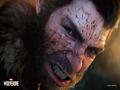
The result feels very much like an old-school beat-'em-up, for better and worse. There's more depth than the early encounters would suggest, but the ability to absorb damage makes the game initially very button-mashy. You can get through a lot of the early game by hammering on Square and occasionally healing yourself. Higher difficulties and the game's more advanced abilities demand greater awareness, but even at its best, Wolverine is much more of a pure brawler than Spider-Man's fluid, constantly evolving combat. I initially found the fighting to be underwhelming, but I enjoyed it considerably more once I had more options. The better comparison is Streets of Rage, more so than Devil May Cry.
That old-school philosophy extends to the level design. Wolverine is largely linear, sending you from one objective to the next through interconnected combat arenas. Some areas offer limited stealth opportunities or side paths containing collectibles, while major action sequences are heavily guided. The Nightmare Challenges provide the closest thing to genuine route flexibility, but even those largely boil down to holding R2, following the next white marker, and occasionally pressing X to jump.
Wolverine therefore feels much closer to Uncharted or Marvel's Guardians of the Galaxy than Insomniac's open-world Spider-Man games. It's a story-driven sequence of fights, downtime, and spectacle with little room to wander. There are quieter moments where Wolverine talks with friends or explores attractive environments, but they function much like Peter's visits to FEAST: welcome breaks from the action rather than substantial gameplay systems.
I think that's ultimately Wolverine's biggest flaw. If you're excited by its cut scenes, characters, and elaborate set pieces, this is a big, bombastic, and frequently entertaining X-Men adventure. However, you're largely at the mercy of its plot and straightforward combat. That's not inherently bad because not all games need to be open-world adventures, but anyone expecting a Wolverine version of Spider-Man will be disappointed.
It also doesn't offer much replay value. There are combat challenges, whiskey bottles with short stories attached, and a variety of costumes. Costumes are cosmetic, with Wolverine's outfit and claws generally customizable separately, although some costumes lock them together. Unlocking costumes increases your total health based on how many you've collected, rather than which ones you wear. I unlocked almost everything in a single playthrough, and revisiting chapters for the remaining whiskey bottles was tedious because you have to replay entire sections, including lengthy story sequences.
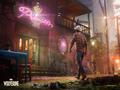
Visually, Wolverine is exceptional. The environments are packed with detail, the animations are excellent, and the set pieces look fantastic. The damage system is particularly effective, gradually tearing apart Wolverine without reaching Mortal Kombat levels of excess. There are a few oddities, such as healing animations that visibly regenerate pieces of his clothing, supposedly thanks to nanotechnology, but I quickly stopped noticing them.
The voice acting is similarly strong. Liam McIntyre gives Logan a phenomenal performance that's somewhat softer than the Steve Blum-style gruffness I'm accustomed to, but it works well for this more emotional version of the character. Most of the cast sells their roles, although there's occasionally a strange tonal clash between characters treating events seriously and others embracing full comic-book cheesiness. The music is solid and appropriate but largely forgettable.
Marvel's Wolverine is a fun, absurdly brutal beat-'em-up. If you know what you're getting into, it's probably the best playable version of Wolverine yet, finally outclassing X-Men Origins: Wolverine. It doesn't quite match the ambition or success of the Spider-Man games, and its repetition and dull traversal occasionally make the experience feel one-note. But if you're a Wolverine fan or simply want a straightforward, frequently satisfying brawler, Wolverine is the best at what it does.
Score: 8.0/10
More articles about Marvel's Wolverine