



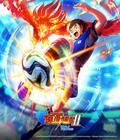
 Captain Tsubasa 2: World Fighters turns soccer matches into thrilling, unexpected battles where players can now unleash super moves for everything from dribbling and tackling to passing and shots on goal.
 Compared to other genres, sports manga and anime don't get many translations into video game form. That seems strange, since an arcade-style representation of the sport seems like a perfect fit for a sports manga, but you'll rarely see a game based on something like Slam Dunk compared to an anime like Kill la Kill. That's why seeing a Captain Tsubasa game a few years ago was such a big deal for manga fans, as it captured the feeling of the manga rather faithfully while providing a fun sports experience along the way. We now have Captain Tsubasa II: World Fighters, and while it is a good game overall, fans may have a different take.
If you never played the first game, then what you'll find is a far cry from the more simulation-oriented games like eFootball or EA Sports FC. It also goes a step beyond what people would normally think when hearing about an arcade-style soccer game. There are no penalties, and while tackles are flashy, there's nothing blatantly illegal, like you'd see in something like RedCard 20-03. Tackles can also be defended against with fancy feints, but the signature element is with goal shots. Every shot on goal is blocked by the goalkeeper, but all of those blocked shots wear down on the goalie's energy meter. Hit a shot that depletes the meter, and if said shot becomes successful, it nets you a point. The battle of attrition works against expectations, as it means you have no chance for lucky shots, but it also means that scores are closer to real-life games, with points being rare.
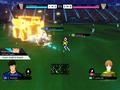
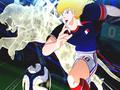
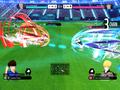
There are quite a number of changes to the base gameplay in this title. You now have a matchup line that tells you exactly who's targeting you if you're on offense and who you're going after if you're on defense. This has a neat side effect in that if you switch characters when on defense, the line will let you know exactly who you switched to. All of the moves you make are part of a combo chain, but stealing the ball lets you inherit the momentum of that chain instead of breaking it. The advantage is that you immediately gain a quick power boost, so you can steal the chain to quickly deliver a powerful move of your own. Shots on goal also got a facelift not just because of the fact that every shot comes with a cinematic. Both the shooter and goalie engage in a guessing game where the goalie tries to predict which one of the eight directions the shooter has chosen. Correct matches mean a perfect block with no damage taken, while incorrect guesses lead to energy depletions that become more severe the further away you are from that chosen direction.
These changes help craft a game that feels faster while also being flashy and more exciting. The chances for a successful tackle are significantly increased, especially since they have a bit of a seeking element to it where your slide will gravitate toward the ball, even if it changes hands. That means that there's rarely a time when a player is strictly on offense or defense, so you're always switching your approach quickly. Cut scenes are everywhere, so each move can feel just as cinematic as the manga. The same applies to every shot on goal, and even though some of the animations get repeated often, it's always amusing to see someone come in to block a shot with their face. The presence of matchup lines means there's less guesswork on who's after who, and the only drawback is that you'll be so caught up in the action that you'll completely lose track of the match time.
Beyond the standard versus matches and museum for songs and the like, the main mode is the story mode. The World Youth arc is the basis for this mode. Tsubasa is now in Brazil and starting to play with the pros, but he's still focused on taking the Japanese national team to a win in the World Youth Championship. Just like before, the story is fairly straightforward, but the characters and subsequent drama around the road to the championships is what fuels the story's momentum.
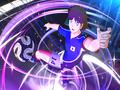
You'll create an original character for this mode, and there are quite a few improvements in this area. There are more options for character creation than before regarding face and hair types, but don't expect to create anything that deviates wildly from the anime's style. You start off as a striker, but you can change your position as you go along, even taking on the role of goalie. What's funny is that despite giving you loads of options to play with, you aren't the main character. You are a protagonist, but you aren't the protagonist, as that role is reserved for Tsubasa. The approach of you being a bystander instead of the main character is novel but nice, as you aren't suddenly altering the story's focus to a less interesting character.
Just like the first game, the campaign has you going through the same matches as seen in the anime and manga, but you can also view several side stories and "what if?" scenarios once you pass any of the major story milestones. However, don't expect to play too many actual matches, as a bulk of your time is spent watching the various cut scenes with fully voiced dialogue. You get a chance to make your own dialogue choices, but they don't really steer the story in a way that deviates from the manga. To be clear, the campaign is enjoyable due to the core story, but you're looking at something that is more visual novel than actual soccer gameplay.
If you're a fan of the original game, the improvements to the action on the pitch aren't enough to distract from the pared-back game modes. There's only one story arc, so even side-quests don't transform the campaign from being a one-and-done affair. While you can still edit your team, the other tactical elements of the game are also gone. You also can't create your own teams from a custom roster. This feels like a reverse of how sequels normally go, as the first game feels more fully featured.
As far as sound goes, Captain Tsubasa II is fantastic. The sound effects are fine, but the music does a fantastic job of mimicking the anime. Every match has an epic feeling because of the soundtrack, and even quieter moments with conversations between teammates feel more intense due to the tunes. The voice work is accurate to the show, but the commentary being English-only during a non-story match is interesting because of the disconnect it creates when everything else is in Japanese. Then again, going for English commentary during a match makes some sense, as the game is busier now. Japanese would mean more subtitles to read, and that would be more distracting.
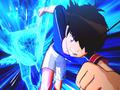
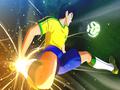
Graphically, Captain Tsubasa II is a step above the first game, but only barely. Some of the stadiums feature more effects like shimmering water, and the abundance of on-screen elements doesn't negatively affect the overall frame rate. Otherwise, it's difficult to see any other improvements to the graphics when placing both games side by side. The models look great, especially when you see them in action during a cut scene, and the stadiums and the pitch also look good. There's still a problem where the camera isn't moving smoothly along with the ball, so you don't get a very clear view of your surroundings, but the action is frantic enough that you're not going to notice that unless someone points it out during gameplay.
If you're a Linux user or one who plays on the Steam Deck, you can immediately ignore this game for now. The game uses Easy Anti-Cheat, but the flag for Linux and Proton use is deactivated, so you can't get far enough to play any part of the game offline. This was also the case for the first game, and people got around that by renaming an existing exe file to play offline. That doesn't seem to be the case in the sequel, as no one has found a built-in exe file for a replacement yet. With this game not being on any known streaming service so far, it's Windows or nothing for now.
If you are going to play online, you'll be glad to know that the performance is actually good. Finding a match is fairly quick, and the online performance felt lag-free with no signs of hitching, even when the screen was busy with effects and with the various cut scenes playing. Good online performance doesn't mean that the experience is flawless. The game doesn't penalize anyone for quitting in the middle of a match, so you will find those who bow out the minute they get a goal scored on them. The game still doesn't feature any form of cross-play, so while the PC population is decent enough for finding a match, it really would've been better to include the pool of console players, since a good chunk of fans will play on those dedicated platforms too.
Your opinion of Captain Tsubasa II: World Fighters depends on whether you played the first game. If this is your first time with the series, then the on-screen action can initially feel overwhelming, but you'll come to enjoy the over-the-top arcade action when you come to grips with the systems at play. If you've played the first game, then you'll like the gameplay changes but hate the fact that the game's modes feel pared back. In the end, the game is good for those looking for a simpler experience, but it's a little disappointing for those wanting some of the depth from the first game.
Score: 7.5/10
More articles about Captain Tsubasa 2: World Fighters