







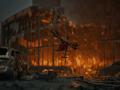
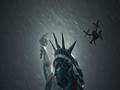
Fires, explosions, natural disasters, infrastructure disruptions, missing people, and extreme weather events – during the campaign, the player is sent wherever a situation spirals out of control. They must assess the threat, decide how to respond, choose the right machine, and carry out the operation under time pressure.
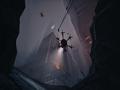
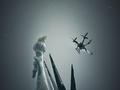
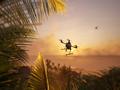
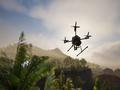
The drone in Rescue Drone Simulator: Second Chance is not a flying camera, but a physical machine the player has to learn to control.
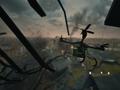
Mass, inertia, thrust, aerodynamics, battery, damage, and weather conditions all affect how the drone behaves. Wind can push the machine off course, extra weight will change how it responds to controls, and a configuration prepared earlier in the workshop can make a real difference during an operation.
The game will offer two control models. Simulator will be an experience closer to real drone piloting, while Arcade will use additional assistance, letting players with no drone experience jump in quickly too.
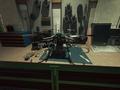
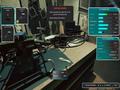
Between operations, the player will upgrade and modify their machines, choosing parts that affect their performance, durability, and flight character.
The title Second Chance refers not only to the people rescued during missions. The unit is made up of experienced specialists who, due to accidents, illness, age, or traumatic experiences, can no longer do their former jobs in the traditional way. Technology gives them a way back.
It doesn't replace their knowledge, experience, or instinct. It lets them use it again – to lead an operation from a safe distance, to reach places a person can't enter, and to keep doing what once defined their lives: saving others. That is their second chance.
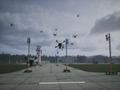
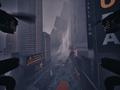
Although the game takes place in the near future, Rescue Drone Simulator: Second Chance deliberately moves away from a sterile science-fiction vision. Its audiovisual layer draws on the character of the '80s and '90s – industrial spaces, analog electronics, physical control panels, and equipment designed above all to work.
The game's story is written by Artur Fojcik, Game Director at The Farm 51, known for his work on Chernobylite and Get Even, a BAFTA Games Award nominee. The campaign begins with rescue operations, but subsequent disasters, climate anomalies, and infrastructure failures start to add up to a larger crisis. Alongside it, the story of the team and the title theme of a second chance unfolds. The project's art direction is led by Wojciech Pazdur, CEO and co-founder of The Farm 51, previously associated with People Can Fly and co-creator of Painkiller. In Rescue Drone Simulator: Second Chance he also serves as art director and composes the game's music, inspired by the sounds of the '80s and '90s.
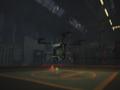
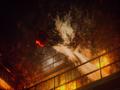
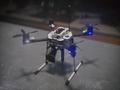
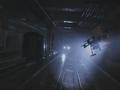
"Rescue Drone Simulator gives us the chance to collide very modern drone technology with the aesthetics and musical sensibility I grew up with in the '80s and '90s. We don't want to make a retro game. We want to create a believable near future with an analog soul – something more physical, industrial, and human. That's why, beyond art direction, I'm also composing the game's music myself. I want the visuals, the sound, and the atmosphere to speak the same language," saod Wojciech Pazdur, CEO of The Farm 51, Art Director of Rescue Drone Simulator: Second Chance."
"A disaster becomes more than a spectacle once the player understands who they're trying to save and who's helping them on the other end of the radio. We want the characters' stories to emerge from what the player does during missions, not just serve as breaks between them. Second Chance is the shared theme of these characters – each of them has lost something important, and each is trying to find a new role for themselves, " added Artur Fojcik, The Farm 51, Game Director of Rescue Drone Simulator: Second Chance.
"What matters most to us is the fantasy of being the person sent into the middle of a disaster – wherever someone has gone missing, a fire has broken out, or traditional rescuers can't safely reach – and the awareness that the outcome of that operation depends on your decisions and skill. Second Chance has another layer for me personally. We're entering a world where AI, robotics, and automation will change many jobs people do today. We talk a lot about what possibilities technology might take away from us. I'm also interested in the opposite question: what can it give back? In our story, technology doesn't replace people. It lets them make use again of experience and skills that, for various reasons, seemed already lost. We want to combine spectacular disasters and the pressure of rescue operations with the satisfaction of mastering a drone and a very human story. That is the foundation of Rescue Drone Simulator: Second Chance," commented Radosław Kalisz, CEO of Anraga Studios.
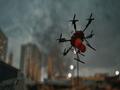
Key Features:
- Four drones, four ways to save a life: Each drone in the player's arsenal has a different role and offers a completely different way to play:
- Rescue Drone – tracks the cell signals of missing civilians, drops medical kits, and marks targets from the air.
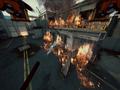
- Firefighting Drone – puts out fires with a powder extinguisher operated from a safe distance or water balloons dropped from height, clearing the way for the rest of the team.
- Police Drone – issues voice commands through a megaphone and uses smoke grenades and a taser, keeping situations under control without putting people at risk.
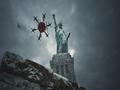
- Interceptor Drone – intercepts and neutralizes hostile drones with a net launcher, securing the airspace above the operation zone.
- Workshop and campaign
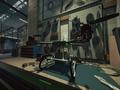
- Full fleet customization in the workshop – motors, propellers, batteries, arms, wiring, and cooling systems have a real effect on the drone's speed, thrust, flight time, and durability.
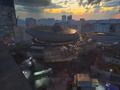
- A story campaign split into four acts and 20 missions played across 5 maps, each available in different weather variants.
- Two control modes, designed to appeal to experienced drone pilots and complete newcomers alike – Simulator faithfully replicates real drone control, with realistic stick mapping and unforgiving flight physics, while Arcade makes it easier to get started with flight assistance that forgives small mistakes. The game supports both controller and keyboard-and-mouse, offering first- and third-person views along with speed and wind indicators.
Rescue Drone Simulator: Second Chance is coming to PC (Steam), PS5, and Xbox Series X|S in Q1 2027.
More articles about Rescue Drone Simulator: Second Chance