






 NBA 2K26 is the next installment of the premier NBA video game basketball simulation series with all-new gameplay, modes and features.
I'm a game enthusiast of a certain age (AKA older), which means I grew up leaning into classic single-player, third-person experiences, the kind that usually pit one versus all. It's a cornerstone of my entire gaming ethos, and there were plenty of titles back then to solidify that foundation. There's too many to list, but my fellow oldheads can probably hum the theme to Castlevania or the little ditty that plays when you die in Ninja Gaiden on the NES.
However, I'm also a massive sports fan, and back in the day (let's say the '80s-'90s), sports games didn't really have narrative single-player campaigns. It just wasn't done. I think once sports games as a whole introduced the options to actually "create" your own players, many of us not only created our player, but also wrote backstories for them in our minds. For a while, that was enough.





Then came NBA 2K16, a full-on, Spike Lee-directed, single-player campaign that established the formula of building an actual narrative around your player's ascension to and within the star-laden NBA ecosystem. Lay the narrative on top of a host of customizable character creation elements, and you have the nuts and bolts of what's essentially a hoops RPG. This is what made what's been known as MyCareer my favorite — and really the only — NBA 2K game mode I spent most of my time in. There's a functional purpose to this as well: The mode serves as an entry point into all of the game's on-court features, both established and new, to welcome casual players and re-establish some ground rules for the more experienced.
All of this brings me to the MyCareer offering in NBA 2K26, which shows a generally deft touch in showcasing the game's subtle and not-so-subtle on-court improvements. However, NBA 2K's narrative campaigns in the past 10 years have ranged from poignant to doing-too-much to flat out silly (please don't make doing TikTok dances with an influencer a mission again. Ever. Good God.). This year's single-player campaign illustrates the game's bigger picture: It's good in most spots, but it can also feel a touch out-of-tune and even baffling for some of the more granular-minded hoopheads among us.
There's good stuff in this year's MyCareer experience, but I have to get this out of the way before I fry out my brain: Personality-wise, this is one of the more annoying incarnations of MP (the story default name of your created character) I have ever witnessed. He sounds and acts like a whiny 13-year-old, and while I appreciate the fact there's more dialogue, scenes and story elements during the season and the playoffs (we'll get to that a bit later), I swear this kid made me try to fast-forward through any cut scene that involved him filming his web series or answering a press conference question. For you super geeks out there, think of how irritating Luke Skywalker sounds talking about power converters. That's what we're dealing with, except he's in the NBA.

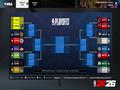
Despite that, I enjoyed the character's actual backstory, even though he's Yet Another Underdog. He's a kid from rural Vermont — not a basketball hotbed, typically — who starts filming himself playing and practicing to get some national notice. Eventually, he gets attention from a renowned trainer and recruiter in Los Angeles who invites him to play in pickup games featuring some nationally ranked players. He shines, joins one of two club teams (each with their own perks that can lead to character upgrades) and starts climbing up the rankings, making a few uncontrolled slip-ups along the way.
A new wrinkle in this year's campaign? No college ball. Instead, our intrepid-but-still-irritating hoops hero travels to play for a pro team in Europe (either in France or Spain), hoping to get even more notice from scouts and eventually get drafted into the league. There are weighty, developed cut scenes and dialogue almost every step of the way, from MP missing practice and getting benched (completely out of your control and causing his slide in the rankings) to his interactions with several higher-ranked players both stateside and in Europe who aren't exactly elated to see some unknown kid from Vermont trundle onto the court.
Eventually, MP gets drafted, but not without a little drama, as a team he didn't work out for calls up his agent out of left field and guarantees a starting job. What's he to do, take the offer and hose the team who originally wanted to draft him or stick with his plan, even if it means coming off the bench at the start of his career?
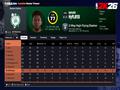
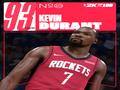
I generally appreciated the breadth of character archetypes and social situations MP found himself in. His coaches are cool, his parents are quite lovely (depending on how you create your character, one might think MP was adopted), and the players he encounters have a range of abilities and personalities, like the low-key, hard-nosed point guard from Chicago or an older and somewhat gruff European basketball legend. I also enjoyed the return of some characters from past games, like coach Wayne Graves, who still keeps making old-school hip-hop references, except now he's running the show for a pro team in France.
Stuff I didn't like included an occasional feeling of a lack of agency when it comes to your character's path. For instance, as you climb in the rankings and excel in Europe, you cannot escape being drafted in the second round of the NBA draft, which is two rounds. The highest I've gotten in several tries is the top of the second round, even though I averaged 40 and 10 in almost every game and crushed everyone in my path. Nope … you're supposed to be an overlooked underdog, and that's what you'll be, according to the game. In real life, someone who did that in the Euro leagues would get serious first-round consideration, or even a look at being drafted in the lottery.


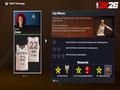
I also didn't appreciate the occasional bout of stupidity MP would walk into. One situation I had to play through involved MP getting chewed out by his coach because he apparently guaranteed a sweep of a team in the playoffs. It made me mutter, "Oh, you dumbass" a few times. It's harder to invest in a main character, no matter the genre, if that character acts like a moron. I also found the odd "trash talk" battle a little too cute because the people talking trash in the world of 2K are guys who kind of don't do that. It's funny to read that Darius Garland ran off his mouth about me, but like, Anthony Edwards says nothing.
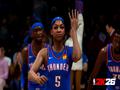
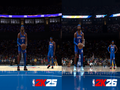
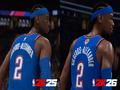
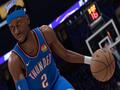
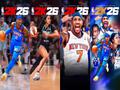
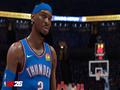
On the court, the upgrades were more noticeable than I thought they'd be. To me, the key feature in NBA 2K26 was a retooled motion engine, making this the best-moving version of the series to date. All of the on-court movement from screens, cuts, launches, floaters and stepbacks look as close to actual NBA action as it's ever been, and it adds to a feeling of moving instinctively when you play it. It fits with the cover athlete, reigning MVP Shai Gilgeous-Alexander of the Oklahoma City Thunder, whose whole game is built upon his mastery of the dark arts of movement, nuance and tapping away at the cracks of whatever defense he's facing.
NBA 2K26 retains its standard as being the most complete and polished hoops experiences out there, but I think one of the things that's holding it back for this old player is the feeling that it's still finding its way on how to nail all of the story elements in its MyCareer mode. It's done it before. I'd like to see them do it again.
Score: 7.9/10





More articles about NBA 2K26