









 The Guild 1 Remake: Europa 1410 takes you back to the roots of the series, drawing inspiration from the original Europa 1400: The Guild.
Forge your path to power in medieval Europe. Choose your profession and master trade, politics, and intrigue to climb the social ladder and found a dynasty. Secure your legacy and dominate history in this immersive economic simulation.
Starting at the head of a fledgling dynasty with only a modest business, your journey begins. As the years pass and your enterprise grows, you need to expand your family’s influence and secure a succession to ensure your legacy endures.
However, business and trade alone won’t give you a voice in the town hall. To truly steer the fortunes of the city and ensure the law always favours your ambitions, you must engage in the intricate political landscape. Use popularity, bribes, or even blackmail to climb the social ladder and secure your place in the highest offices.
In The Guild – Europa 1410, you navigate a complex web of relationships, where every decision can impact your dynasty’s future. Master the art of trade and production to build your wealth and use diplomacy and cunning to outmanoeuvre rivals. Build your legacy and make choices that will ripple through future generations. Whether through strategic alliances or open rivalry and clever schemes, the path to dominance is yours to choose.
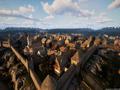
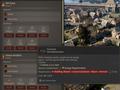
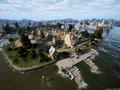
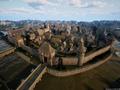
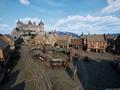
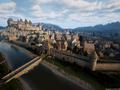
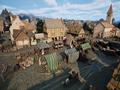
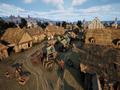
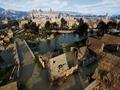
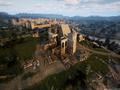
The sound of a medieval city is impossible to ignore: the constant hum of shouting merchants, ringing hammers, marching guards, and the quiet whispers of those working in the shadows. It’s the sound of opportunity, of risk, of a future being shaped in real time. These cities are more than just places on a map. They are the driving force of progress, where medieval tycoons make their fortunes, claim power, and start their legacies.
In the latest developer diary for The Guild – Europa 1410, the focus shifts to the four playable cities themselves and what makes them special. Inspired by their 15th-century counterparts, each city is shaped by distinct districts with their own character, risks, and rewards. Set up shop near a marketplace for easy profits, or take your chances beyond the city walls - just don’t act surprised if things get... stabby.
And trouble has a way of spreading. Cities evolve over time, influenced by player actions and political decisions. Districts can prosper or fall into decline, crime can rise, reputations can shift, and every choice leaves a lasting impact on the people living there.
This adds a new layer of strategy to The Guild – Europa 1410. Invest in infrastructure, enforce order, or take advantage of chaos to further your own ambitions. Shape a district into a respectable hub of commerce or turn it into exactly the kind of place your competitors would rather avoid.
Because you’re not the only one chasing power. Rivals, families, and opportunists are all working to tip the scales in their favor. Sometimes openly, sometimes from the shadows.
Greetings, Citizens!
In The Guild - Europa 1410, as you work towards your business ambitions and political manoeuvres, every move you make will play out in the city of your choosing. With this dev diary, we’re going to dive into the cities that you can build your legacy in.
In this dev diary, we want to introduce the first four cities in The Guild - Europa 1410, namely Kuttenberg (Kutná Hora), Nuremberg (Nürnberg), Graz, and Wrocław. The cities are set in the Holy Roman Empire, and each city has its own perks and qualities that can affect your playthrough.
Though some of the characteristics and descriptions of the cities are subject to change, we would like to share what we’ve been working on so far!
In The Guild - Europa 1410, all cities are designed to mimic their 15th-century historic counterpart. This also affects which parts of the city are home to your business buildings and where your first humble residence is built. The quality of life in each district greatly affects the safety and reputation of the area and the buildings within, which, in combination with each city’s unique layout, allows your playthrough with different professions to feel new and different each time. Some factors to keep in mind are your business’ distance from the marketplace (the closer you are to the marketplace, the easier it is for you to sell your wares), the district your business is in (some districts are better maintained than others), or even whether or not your business is within the city walls (as being outside the city walls can prove to be more risky).
Kuttenberg
In medieval times, as with The Guild - Europa 1410, money shaped politics and people, which allowed Kuttenberg to be a vital city in the Holy Roman Empire. Known as Kutná Hora in Czech, the city is set in the region of Bohemia, and is known for its rich silver vein. Kuttenberg is home to the Italian Court, a part-time royal residence, but also Bohemia’s mint and source of the famous Prague groschen - one of the most influential coins minted in Medieval Europe. Kuttenberg’s central location within Bohemia made it well-connected to the Holy Roman Empire’s trading network, while being protected from external forces outside the Empire.
Kuttenberg is a mid-sized city in The Guild - Europa 1410, with four distinct districts. Aside from the Vrchlice stream flowing just outside the city’s outskirts, you’ll also see the foundations of the renowned St. Barbara’s Church.
Nuremberg
Another important aspect in the medieval times was manufacturing capabilities - this is where the city of Nuremberg shines. Known as Nürnberg in German, this Franconian city is known to be the Holy Roman Empire’s workshop, forging high-quality goods. Much like Kuttenberg, it was also a central location in the Empire, which made it a well-connected city in terms of trade routes, whilst being protected from external forces. With the city’s safety, Nuremberg also served as a meeting place for the Imperial Diet, which brought together the Holy Roman Empire’s noble decision-makers.
Nuremberg in The Guild - Europa 1410 is a bigger city, with the Pegnitz river and its waterways winding through the city’s six districts. Due to the city’s size, its bigger population is served by two marketplaces, which means double the chance for you to make or break business deals and profit.
Graz
Since its first mention in the 12th century, Graz served as the Holy Roman Empire’s bulwark in the East, both against the Hungarians and the Ottomans. As the capital of Inner Austria and a residence city of the Habsburg monarchy, Graz gained political influence and importance throughout the 14th and 15th centuries.
Graz in The Guild - Europa 1410 is a small city, with 5 districts and the Mur river flowing through the city. The city’s castle atop a hill overlooks its inhabitants, guarding the city from external threats.
Wrocław
Wrocław is the largest city in Silesia. Being under the Bohemian crown for a long period of time, Wrocław’s location on the outskirts of the Holy Roman Empire made it ideal to serve as the Empire’s bridge to Eastern Europe. Aside from being an administrative center for the Bohemian imperial lands, the city’s location and convenient access to water as a natural resource also made it a perfect trading hub.
Wrocław is a bigger city in The Guild - Europa 1410, with five districts and many well-protected islets on the Oder river. You may choose to construct your additional business workshops on some islets, though you need to make sure that there is enough space - some islets are more coveted than others due to their physical fortifications, while the lack of such protection in some islets makes it easier for crime and its consequences to be rampant.
City Layouts: Districts and Quarters
Each city in The Guild - Europa 1410 is divided into districts, and each district is further divided into quarters. A city district can be part of the city’s outskirts at the beginning of the game, but grow to be an integral part of the city over time, with its own walls and city gates. You can greatly influence the development of a district and quarters by holding the relevant office to build city walls, new fountains, marketplaces and pillories.
Everything that happens within the city has an impact on its citizens. The quarters' reputation, crime rate, zeal or ruin and filth change how easily people living there get sick, robbed or how certain actions are perceived by other inhabitants. Everyone living and working within a quarter can improve - or worsen - the conditions for all its inhabitants, changing how easy it is for thieves to scout out and break into buildings, or how many people visit the inn instead of attending mass in the evening.
City districts and quarters add a new layer of city management to The Guild - Europa 1410 that allows you to shape the city according to your business’ needs. You can develop a quarter from a run-down neighbourhood with a high crime rate to a bustling and respected community of devout believers; or, you can try and exact your influence to do the opposite and turn a respected, wealthy quarter into a hot spot for crimes, and a hunting ground for your thieves.
As in every The Guild game, craft and trade is one of the core pillars of The Guild – Europa 1410. Choose from a wide variety of professions, like the blacksmith, alchemist or the tailor, and expand your business until you are the most influential magnate in the city.
Each profession offers an immersive and unique gameplay experience, putting you in charge of your business’ growth and success.
For those who prefer alternative ways to make money, The Guild – Europa 1410 offers a different, more thrilling path. Engage in cart robberies, scout buildings for valuable loot, send your thieves to pickpocket unsuspecting citizens, and even kidnap people for ransom. The life of those who oppose the law is filled with danger but full of excitement and potential for great rewards.
Alternatively, you can choose to uphold the law and patrol the streets with your guardsmen. Protect the city from criminals, maintain order, and earn the respect of all law-abiding citizens. Whether you choose a life of crime or one of virtue will have a significant impact on your fellow citizens.
In The Guild – Europa 1410, politics is key. Securing one of the prestigious and powerful offices yourself can significantly advance your ambitions while impeding your rivals. And when necessary, a bit of blackmail can be just the tool to secure the support you need from other office holders. But beware – every criminal action you take could leave behind evidence, potentially to be used against you in court.
Experience a new level of immersion with state-of-the-art graphics that bring the world of The Guild to life like never before. From bustling marketplaces and busy workshops to the intricate architecture of the town hall, every detail is crafted to support the simulation of a realistic, historic city. Watch as new districts take shape and the landscape transforms around you, reflecting your own actions and the growth and development of the city.
Additionally, The Guild – Europa 1410 introduces a host of innovative new features to the series to further enrich your gameplay experience, while staying true to the essence and core of The Guild series, offering engaging gameplay for both new players and longtime fans.
Challenge others and share your medieval adventures in exciting multiplayer sessions with up to 12 players. Compete, collaborate and backstab your way to the top, harass your friends with cart ambushes, drag them to court, break into their houses or challenge them to duels – the multiplayer mode offers countless opportunities to make sure every game is unique and memorable.
The Guild – Europa 1410 is in development for PC (Steam).
More articles about The Guild 1 Remake: Europa 1410