









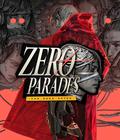
 Zero Parades: For Dead Spies is a story-rich espionage RPG where you're a brilliant but tormented operant on a desperate assignment.
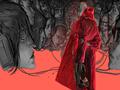
In Zero Parades: For Dead Spies, players take on the role of Hershel Wilk, codename "Cascade," an elite spy who led her entire ring to disaster years earlier and was "put on ice." For any other spy, that would have ended their career, but Cascade is just competent enough to get a second chance. She's sent to the city of Portofiro to do ... something. The exact specifics of the job are unfortunately vague, since you arrive to find your contact in a coma and your handler trying to scuttle the mission. Left with little choice but to puzzle out why you're there and what your goal is, Cascade is forced to reunite with her old crew and hopefully redeem herself.
It's nearly impossible to discuss Zero Parades without bringing up Disco Elysium, and for good reason. Zero Parades is very bluntly built upon the bones of that game, even if the well documented controversy around its production team and studios is common knowledge at this point. You can't call Zero Parades a sequel or even a spiritual successor, but yet at the same time, it carries a lot of the same DNA. This made approaching the game a tad difficult at first because it sometimes feels like it is wearing the skin of something it isn't. Compared to something like Esoteric Ebb, which is very much its own thing, Zero Parades is a little messier and more muddled, and constantly comparing it to Disco Elysium doesn't benefit the game.
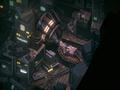
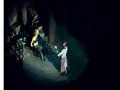
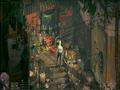
It's essential to approach Zero Parades not as Disco Elysium 2 but as its own self-contained story, characters and experience, so you can appreciate what it does well on its own merits. Yes, it uses a lot of the same concepts as Disco Elysium, and the drama is difficult to sort out, but if you're willing to give it room to speak on its own instead of comparing it to its legendary sibling, you can see its own strengths. The game even seems aware of this, as a major element of the game is the concept of bootlegs and copies and what value those things can have. It can be meta in that way, and it doesn't always succeed. For good or bad, it's a game that always lives in the shadow of what came before.
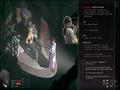
A big part of the difference is that Zero Parades is less absurd. It's still plenty ridiculous because the game opens up with you finding your initial contact with his pants down, in a coma, and with a phone sex card in his pocket. The way you act and respond to him can make Harry Du Bois seem respectable in comparison. Zero Parades leans very hard into the actual darkness and dreariness of a spy's life. It's not the illustrious and exciting James Bond kind of drama; it's the simple and mundane successes, failures and consequences.
It's a frequently grim game, as Cascade has to deal with the consequences of spycraft as well as her earlier screw-ups. Wandering through the detritus of a ruined operation can be brutal and depressing, and it can underline why failure can be so painful. I don't like spoiling any of these reveals because discovering them in context is critical to enjoying the story. I was deeply affected by the reveals because when the game is genuine and honest, it is at its best.
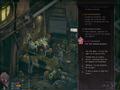
This also means the game is at its weakest when it's desperately trying to show you that it has the same personality as Disco Elysium. The earliest parts of the game feel the weakest because it felt like it was trying too hard to make me accept it as a successor to Disco Elysium instead of as its own work. The opening of the game lacks confidence to the point that it feels like a pale imitation of the original, and I felt rather negative toward the earliest segments of the game; I had to force myself to continue. Once I got past its lack of self-confidence, I really started to enjoy the story.
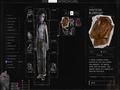
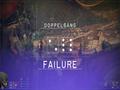
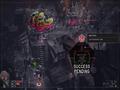
As you might expect, the gameplay in Zero Parades is functionally identical to Disco Elysium. Cascade has multiple different traits: Intellect, Relation and Action, which basically translate to smarts, charisma and physical capabilities. Each of these is further tied to sub-skills, such as Shadowplay, Cold Reading, Nerve and more. Each trait has its own personality, which play into conversations in your head and can sometimes benefit or hinder Cascade's actions. Depending on which traits you level up, you'll have more options on how to handle situations, but some are more useful than others.
Each trait is also tied to a meter: Anxiety, Delirium and Fatigue. Actions you take will fill these meters. Sometimes, they'll rise on their own as a natural consequence of your job, and other times, failures (or even successes) can bring them up. Should a meter max out, you're forced to sacrifice a level in one of your skills to lower it. You can also manage this through various vices, but frequently, it'll be less about lowering the bar and more about passing the consequences from one to another. Drinking a caffeinated beverage might relieve fatigue, but you pay for it with more anxiety.
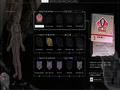
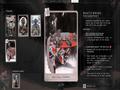

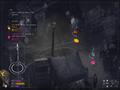

I expected this system to be controversial, but I enjoyed it. Rather than a "health" bar in the traditional sense, it seems to portray the gradual and effective breaking down of Cascade's capabilities as stress and danger build up. Being a spy is a constantly taxing task at the best of times, and Zero Parades is not the best of times. It makes the gradual losses and setbacks feel more like a part of the story and less like a failure state. The meter gameplay mechanic feels appropriate for this story.
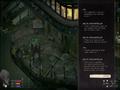
This is pretty much the only major change to the Disco Elysium gameplay, and it does run into some issues. If you're playing on a controller or Steam Deck, the interface hasn't meaningfully improved from the last game in any notable way, so interacting with the menus is still a chore. Movement and exploration feel identical. At times, it felt like they lacked the confidence to even fix common complaints about the original game.
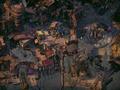
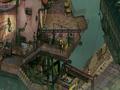
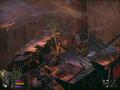
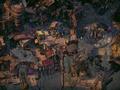
Visually, there are also a lot of parallels. Portofiro is entirely its own place, with its own people, but there are echoes of Revachol everywhere. The art style and presentation all maintain what came before. This isn't a negative because it fits the game, but it also contributes to the constant struggle between being fresh and being a copy. The voice acting was a bit mixed. There are some voices I truly disliked to the point that I wanted to turn off the acting, but for the most part, they do fine.
Zero Parades: For Dead Spies lives in the shadow of something bigger, and it never quite manages to escape it. Its biggest flaws come from a lack of confidence in itself, and when it speaks with its own voice, Zero Parades is truly special and memorable.
Score: 8.5/10



More articles about Zero Parades: For Dead Spies