







 The Adventures Of Elliot: The Millennium Tales is a single-player action/RPG featuring a bold narrative, deep exploration, robust customization, and intense real-time combat.
The Adventures of Elliot: The Millennium Tales follows the titular Elliot, an adventurer in the land of Philabieldia (sic). He spends his days exploring the wilderness beyond the kingdom of Huther, the last bastion of human civilization in a world overrun by dangerous beast-men. The kingdom is protected by a magical barrier maintained by its princess, Heuria. During one of his journeys, Elliot discovers a mysterious chamber deep within an ancient ruin. There, he learns of a power said to grant the ability to travel through time. However, no sooner does he report this discovery to the king than the kingdom's scheming vizier seizes the opportunity, journeying into the past in an attempt to rewrite history for his own gain. With the fate of Huther at stake, Elliot must pursue the vizier through time and stop his plans before they come to fruition. Along the way, he is aided by a fairy named Faie, who repeatedly rescues him when he's in peril.
The plot is very straightforward, with most events unfolding exactly as expected. There are few genuine twists, and those that do exist are foreshadowed so heavily that I was able to predict them the first time I met the relevant characters. In many ways, the game feels like it was designed for a younger audience, featuring direct storytelling and characters whose motivations are rarely ambiguous. Its biggest flaw is a tendency to overexplain itself, perhaps as a consequence of that target audience. The dialogue is often unnecessarily verbose, even by the standards of someone accustomed to text-heavy RPGs, and the pacing suffers as a result. Simplicity isn't inherently a problem, but a significant portion of the early game feels padded and could have benefited from tighter writing and editing.





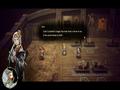
Adventures of Elliot suffers from having one of the most genuinely nonsensical time travel plots I've encountered in a long time. The story simultaneously embraces the ideas of predestination paradoxes and an alterable timeline, often treating both as true whenever it's convenient. As a result, the rules governing time travel feel inconsistent, and Elliot's trips to the past rarely hold up to scrutiny. One example involves a bartender whose family has long upheld a motto that values objects over people. After traveling to the past and helping one of the bartender's ancestors, the ancestor declares that he's going to change the family motto. Logically, you might expect this to result in a different family history (or at least a substantially different bartender) when you return to the present. Instead, the bartender is exactly the same person, only with a sudden change of heart that reflects the revised motto. It's a convoluted outcome that falls apart the more you think about it, a problem that only grows as time travel becomes more central to the story.
At its core, Adventures of Elliot is very similar to a classic SNES-era Zelda game. Once the adventure begins, you'll travel from dungeon to dungeon as the story directs you, but you're free to take breaks to explore, tackle side-quests, hunt for hidden treasures, or complete optional objectives. Many of these take the form of special shrines that contain life gems; collect four of them, and you'll gain an additional health point. The parallels are so obvious that you'll probably know exactly what you're getting into from the start. That's not necessarily a criticism, though, as the Zelda-inspired elements are among the game's greatest strengths.
The basic structure of the game is fairly straightforward. You explore Philabieldia across four distinct time periods: Safekeeping, Reconstruction, Magic, and Blooming. Each is set progressively further in the past as you uncover the mystery threatening the kingdom. Once you've visited a time period, you can return to it at any time using the fast-travel system, making it easy to move back and forth between eras. Most areas are filled with side-quests, hidden dungeons, and various points of interest to discover. Dungeons and caves often reappear across different time periods, with similar layouts but altered puzzles depending on the era.

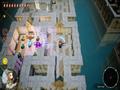



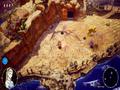

Elliot has access to a surprisingly wide variety of weapons: bombs, boomerangs, bows, chain blades, hammers, spears and swords. Any weapon can be equipped at any time, and you can carry two at once, swapping between them on the fly. Bombs and bows have limited ammunition that must be replenished through pickups, in true Zelda fashion, while the rest can be used freely. Each weapon can be upgraded multiple times throughout the story and further customized with Magicite crystals. Every weapon also has a charge attack, which gains an additional charge level with each upgrade. These attacks deal massive damage and often come with special effects. Elliot also carries a shield, which can be used to block attacks or once upgraded, parry attacks back at enemies.
Each weapon tends to have its own distinct playstyle. Swords are the all-rounders and kind of good at everything. Spears excel in 'first hit ' and dash attacks. The Hammer is strong and hits a wide area in exchange for speed. The chain-blades hit in a wide area, can be charged to do a constant low-damage attack, and pull you directly to enemies while inflicting status effects. Boomerang is a long-distance option that can be upgraded to stun or slow enemies, while Bows are more damaging but limited use. Bombs, of course, are big, explosive and dangerous and those explosions can be further modified for bigger booms or status effects.
Each weapon has its own distinct play style. Swords offer a balanced mix of speed, power, and versatility. Spears excel at opening strikes and dash attacks and thus reward aggressive positioning. Bombs are exactly what you'd expect: large, explosive, and dangerous, with upgrades that can increase their blast radius or add status effects. Boomerangs provide a reliable long-range option and can be upgraded to stun or slow targets, while bows deal greater damage at the cost of limited ammunition. Chain blades cover a broad area, can be charged into a sustained low-damage attack, and allow Elliot to pull himself directly toward enemies while inflicting status effects. Hammers trade speed for raw power and wide attack arcs.


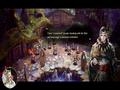




The aforementioned Magicite system further enhances each weapon's abilities. Every weapon has its own set of Magicite crystals that can be equipped in a Magicite Box. Each crystal has a cost, and your box can only hold a limited total amount at once. Most Magicite amplifies what a weapon already does well. Bombs can be modified to freeze enemies caught in their blast, spears can gain invulnerability during charge attacks or leave behind pillars of flame, and swords can boost attack power or allow your next shield block to protect against attacks from all directions.
It's a neat customization system, but it doesn't radically alter how weapons play. Most upgrades reinforce existing strengths rather than create entirely new play styles. Bows can refund arrows or gain bonus damage at the cost of mobility while charging. Boomerangs can stay airborne longer, provide passive bonuses while in flight, or they can become more effective at stunning enemies. As a result, choosing the appropriate weapon for a given situation can make a significant difference. You can also equip up to three trinkets, which provide passive bonuses such as extending your parry window or increasing experience gains.
Early on, you're joined by the chattering fairy Faie, who serves as your constant companion throughout the adventure. She floats around the battlefield, attacking enemies on her own and collecting dropped items and crystals. You can control her directly by using the right analog stick, and before long, you'll begin unlocking her special abilities. These abilities come in five forms. Ignite causes Faie to burst into flames, allowing her to light torches and damage enemies. Sprint dramatically increases Elliot's movement speed at the cost of reduced control. Vacuum pulls nearby objects and enemies toward Faie. Warp allows Elliot to instantly teleport to her current location. Finally, Clone temporarily transforms Faie into a duplicate of Elliot that can fight and move alongside him.
For the most part, combat is quite fun. It follows fairly standard action-RPG conventions, but the wide variety of weapons and the forgiving parry system keep fights feeling fast and engaging. Boss encounters are generally more complex, often introducing special mechanics such as knocking a core loose to expose weak points or throwing explosives into the gaping mouth of a fish-like monster. Overall, the bosses are well designed and enjoyable, but on the Normal difficulty level, some of them have so little health that you barely get to see their mechanics unless they conceal their weak points.




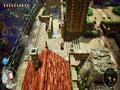


I don't think the time travel mechanic is particularly well implemented. There are four major time periods, but the world changes very little between them outside of the main town and one nearby location. The overworld layout and much of the cave design remain essentially identical, with only minor differences in gear placement, while the same enemies appear across each era. Rather than feeling like I'm seeing the land evolve over a millennium, it feels like three-quarters of the game world has remained unchanged. A bit more effort to make each time period feel distinct would've gone a long way. Instead, you're left retreading the same ground and fighting the same handful of enemies over and over.
A related issue is how slow Adventures of Elliot is to get going and how uneven its pacing can be. The early hours drag considerably, with heavy amounts of dialogue that feel like they're both overloading you with information and under-delivering on meaningful interaction. Enemies are basic, dungeons are straightforward, and the game leans heavily on tutorials and guidance throughout this section. Even after Faie joins the party, which picks up the pace somewhat, the opening still feels sluggish overall. It also doesn't help that several early bosses are reused in quick succession, with more varied and engaging encounters only appearing much later in the game.
Even once the game gets going, the tool management feels odd. You acquire almost every weapon very early on, many of which can be used in puzzles, but few puzzles actually make meaningful use of them, and those that do often feel incidental rather than deliberately designed around your kit. It somewhat resembles A Link Between Worlds, where puzzles can't assume your inventory, but in Adventures of Elliot, you do have access to nearly everything.



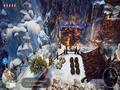
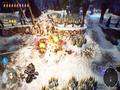


Faie's abilities run into a similar issue. Rather than feeling like a natural extension of exploration, they often come across as ways to bypass certain puzzles. I kept expecting Clone or Warp to be used more consistently, but half the time, they were more useful for skipping obstacles than solving them. The game improves later on, with more involved puzzles and noticeably stronger boss fights, but it takes a surprisingly long time to reach that point. In the meantime, there are stretches where it feels like the game has already shown most of its tricks, even though there are still many hours left to go.
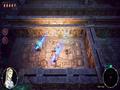
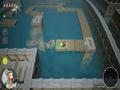
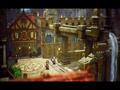
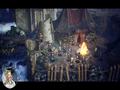
Graphically, Adventures of Elliot looks great. The HD-2D visual style works very well, with the characters environments and monsters all featuring a wealth of detail and subtle animation. Some of the sprite work is especially charming, helping to elevate cut scenes in a way that even higher-budget presentations sometimes struggle to match. The soundtrack is equally strong, delivering a steady stream of excellent tracks that provide much-needed atmosphere from start to finish. Unfortunately, the voice acting is a mixed bag. While there are some solid performances, there are also some genuinely poor ones. Elliot is serviceable, and Faie is fine if you can tolerate the squeaky, high-pitched delivery, but several other major characters miss the mark entirely. It's a surprisingly inconsistent aspect of the presentation, especially since there are standout performances as well — most notably Mao's voice actress, who does an impressive job carrying a significant portion of the game.
The Adventures of Elliot: The Millennium Tales feels like it gets about three-quarters of the way toward being a fantastic game, but its final stretch drags it down. When it's firing on all cylinders, it's a great deal of fun and comes very close to capturing the energy and spirit of a classic Zelda title. When it isn't, it feels slow, meandering, and unfocused. A strong soundtrack and beautiful visuals help elevate the experience, but ultimately, Adventures of Elliot lands as a good game that could have been great with a bit more polish and focus.
Score: 7.5/10










More articles about The Adventures Of Elliot: The Millennium Tales