







 Dead Or Alive 6 is the next installment in the long-running fast-paced 3D fighting franchise, featuring multi-tiered stages that create a truly entertaining competitive experience.
Dead or Alive 6 launched in 2019 for the PC, PS4, and Xbox One. While it was a solid fighting game, it felt more restrained than ambitious when compared to Dead or Alive 5. Although the series continued its tradition of releasing a massive amount of DLC costumes, the game never received the multiple expanded editions and gameplay revisions that had become a hallmark of previous entries. That has finally changed with the release of Dead or Alive 6: Last Round. Unfortunately, the passage of time has not done the game many favors. On the PS5, this updated version feels remarkably similar to the original release, offering little that makes it stand out from its 2019 incarnation.
On the surface, DoA6 seems like a by-the-numbers sequel. Its core fighting system still revolves around a triangle mechanic, where one move type consistently beats another when both connect at the same time. Strikes, such as punches and kicks, beat throws; throws overpower holds; and holds serve as counters to strikes. There are now two hold systems to choose from. The three-way method uses up-back for high attacks, down-back for lows, and a neutral button press for middle attacks. Switching to the four-way method separates punch and kick counters, requiring either back or forward with the hold button. The game also includes throw escapes, but they aren't nearly as common or forgiving as they are in Tekken 7.







The biggest new gameplay addition is the Fatal Action system. By turning R1 into a dedicated attack button, the game gives players access to faster-hitting combo strings. These attacks can stun opponents on contact and have plenty of visual flair, especially if you leave the blood effects turned up. The trade-off is that they deal less damage and are more vulnerable to counters. Another series first is the super meter. With a full gauge, you can unleash a Fatal Blow, a cinematic slow-motion attack that deals heavy damage and sends opponents flying across the stage. It functions similarly to the Power Blow from the previous game, but without the obvious windup that telegraphs the attack. At half meter, you can spend the gauge on a combo escape to immediately interrupt pressure and retaliate with a one-hit counterattack.
The game's stages feel both expanded and scaled back at the same time. Much of the environmental variety from previous entries remains intact, with uneven terrain, physical barriers, danger zones, and multi-tiered arenas all making a return. New hazards have also been added, including explosive floors and obstacles that provide an extra hit when an opponent is launched into them. Two stages even feature crowds that will shove opponents back the first time they're knocked into them, creating an opening for additional attacks before they finally hit the ground.
One standout arena is a museum-like stage that combines several iconic locations from the series, including the final battle arena from Dead or Alive 2, the Vegas Strip stage from Dead or Alive 4, and a battle zone inspired by Dead or Alive 5. Some returning stages may leave longtime fans disappointed, though. Several arenas are reused from Dead or Alive 5, and one appears virtually unchanged. More notably, none of the stages feature the lengthy multi-tier drops seen in earlier games, and the ledge-grab mechanic that allowed players to reduce fall damage has been removed entirely, even though it was a highlight of the fifth installment.
That sense of expansion and removal also carries over to the game's modes. The tutorial and training offerings remain fully intact and are just as comprehensive as before, teaching everything from the fundamentals of the combat system to advanced character-specific combos. All of the standard versus options are present, along with Arcade mode, which pits players against a randomized lineup of 10 opponents across at least five different difficulty routes. However, the mode selection has been streamlined in some notable ways. Only single-fighter modes are available, as both team battle and tag modes have been removed. The loss of team battles isn't particularly significant, but tag mode has been a series staple since Dead or Alive 2, so its absence is sure to disappoint longtime fans.






Online play performs well, with little to no noticeable lag across a variety of matches, and matchmaking times are reasonably short. That's especially impressive given that the lobby system is added through a day-one patch. The bigger issue is the lack of player matches, so you'll spend most of your online time competing in ranked play.
The Extras menu houses many of the game's more superfluous features, including options to change the music, read character biographies, watch fight replays, and brush up on series trivia. For most players, the customization mode will be the main attraction, but it may also prove to be one of the bigger disappointments. The costume selection covers a range of styles, with most outfits being relatively modest and only a handful showing more skin. While most characters have at least six costumes available, many are simply re-colors, making it a much smaller number of distinct outfits. Characters can also equip different glasses and sunglasses, but the selection is limited. Hairstyle options are similarly sparse, leaving little room for customization across the roster. To make matters worse, characters can't be rotated in this menu, so some cosmetic changes won't be visible until you enter a match.
The final two modes are focused entirely on single-player content and continue its pattern of pairing a strong feature with one that feels less polished. The standout mode is DOA Quest, which gives players a lengthy list of challenges and some worthwhile rewards. Spread across 100 stages, each challenge assigns a preset fighter, designated opponent(s), and three objectives to complete. Most tasks simply require defeating your opponents, but others ask for more specific feats, such as striking an enemy during a sidestep, performing a set number of reversals, or landing a combo that reaches a certain damage threshold. Each completed objective awards coins that can be spent on hairstyles, glasses, and music tracks. Clearing all three challenges in a stage grants a separate currency used to unlock costumes for the roster. The matches are ideal for short play sessions, and the steady stream of unlockables gives solo players something substantial to work toward if they aren't interested in competing online.
Story mode is the game's other solo-focused offering, and it feels like a strong idea that still needs refinement. It continues directly from the events of DoA5, with Helena's DOATEC seeking the help of the ninja clan to stop the schemes of its subsidiary, M.I.S.T. This time, the organization's plan involves resurrecting a cyborg version of the evil ninja Raidou by using fighters who carry his bloodline. Elsewhere, Zack is trying to recruit new fighters for the tournament, Jann Lee is frustrated by his inability to find a worthy challenger, and Nyotengu convinces several fighters to recover a treasure from a sunken ship. The threads are strange and only loosely connected, but the mode still stands out as a welcome feature in the series, especially since similar narrative efforts in other major fighting games have fallen flat.
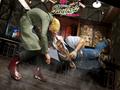
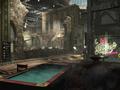




What may frustrate some players isn't the story, but the way Story mode is structured. Instead of presenting a single continuous narrative through traditional chapters, the game breaks events into separate segments organized by both character and moment. These are laid out in a chart-like interface that can make it unclear where to go next, even with shoulder button prompts pointing toward the next fight. Some sections are nothing more than brief matches, and the constant shifts between cut scenes and loading screens make the pacing feel uneven and disjointed. The entire mode lasts two hours at most, which makes it feel like it ends just as it begins to gain momentum, ultimately leaving the experience feeling unsatisfying.
All of the above was taken from the PS4 review of the original game, and it all holds true in this version because nothing was changed at all. After seven years, there is nothing that has mechanically changed. There are no new modes to discover, no new additions to the story, and no new challenges to conquer. Photo mode has received some tweaks, but there's nothing major to gush over. Aside from this now being a native PS5 title, DoA6 is exactly the same title as before.
There is only one notable change compared to the base game: the inclusion of five fighters with varied play styles that were previously offered up as DLC: Momiji, Nyotengu, Phase 4, Rachel and Tamaki. However, the original DoA6 had two other DLC characters in the form of Kuma and Mai from The King of Fighters XIV, and they're once again offered up as DLC rather than being part of the main package. One can argue that this may be a licensing issue, but it feels cheap that owning the characters in the original DoA6 doesn't entitle you to have them again in Dead or Alive 6: Last Round.
That issue highlights one of the more frustrating aspects of this release. Owning the original version along with its DLC doesn't carry over in a meaningful way to this version. Save data can be transferred, so progress in Challenges and Story mode isn't lost, but that's where the benefits end. Owning previous characters or Story content doesn't grant access to this release at a discount (or free), which feels difficult to justify given how little has changed overall. While the PS4 version remains playable on the PS5, it's still disappointing that access to new characters and future DLC requires purchasing the entire game again. The game tries to soften this by allowing most DLC costumes (except for Mai and Kula) to transfer over, a welcome concession considering the cumulative cost of all DLC far exceeds the base game.


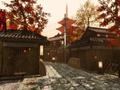




Since the game has transitioned from the previous generation of platforms to current hardware, expectations naturally lean toward some visual improvements. However, at first glance, it's difficult to distinguish the PS4 version from the PS5 release. Character models and environments appear largely unchanged, and if there is a resolution bump, it's subtle enough to go almost unnoticed, with jagged edges still visible alongside occasional light bloom issues. Visual details like sweat effects, dirt, and costume damage are present but so faint that they're easy to miss in actual gameplay. There also seems to be no meaningful difference between Performance and Quality modes, with one notable exception: the Lost Paradise stage. In Quality mode, the water gains noticeable reflections, and the color tone mapping appears slightly richer, almost as if HDR has been enhanced. While it's a welcome touch, it doesn't dramatically transform the stage compared to its original look. The developers have stated that additional stages will receive lighting improvements in future updates, but given the time since the game's original release, it's disappointing that only a single stage has been meaningfully upgraded so far.
The audio is fine overall mostly because it is unchanged from the original title. The sound effects hit hard, and while the music from the previous game is better than what's featured in DoA6, this soundtrack still sounds good overall, with tracks now being made for specific characters in addition to tracks being made for specific stages. The game features both Japanese and English vocal tracks, but the latter still sounds a bit off in parts, so you're better served by sticking with the original Japanese.
Taken on its own, Dead or Alive 6: Last Round is still a solid fighting game. The adjustments to the core combat system improve accessibility without sacrificing depth for more advanced players. The roster is strong, especially now that previous DLC characters are included, but customization feels noticeably thin once DLC costumes are set aside. However, the requirement to repurchase characters like Kula and Mai, combined with the lack of meaningful presentation upgrades beyond a single reworked stage, makes this feel like a minor and somewhat underwhelming revision, especially given how long players have waited. If you're new to the series and enjoy fighting games, DoA6 is still worth a look. For anyone who has already invested significant time in the original release, there's little incentive to return unless future updates expand the lighting improvements across more stages or introduce a substantial wave of new characters.
Score: 6.0/10











More articles about Dead Or Alive 6 Last Round