








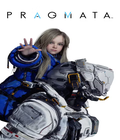
 Set in a dystopian near-future on Earth's Moon, Pragmata will take you on an unforgettable, adventure.
I love seeing new entries in my favorite franchises, but there's something distinctly fun about seeing something brand new. While I love Resident Evil and Monster Hunter, some of my favorite Capcom games are their smaller titles, like Okami or Viewtiful Joe. It's great to play experimental games that try something distinctly new and different. In a lot of ways, Pragmata feels like it could have wandered out of the PS2 era. It's an unusual and experimental game given a high budget and a lot of focus, despite being completely new. It's like that in another way: Pragmata is one of the most enjoyable games Capcom's ever put out, and that's some high praise.
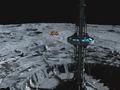
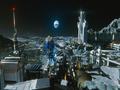
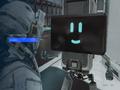
Pragmata follows Hugh Williams, a repair grunt working for the Delphi corporation. Delphi's scientists discovered a rare mineral on the moon that allows for the creation of super-potent "Lunafilimant," which enables a super 3D printing. It's a mineral that can only be mined on the moon, and mysteriously, all contact with Delphi's lunar base has ceased. When Hugh and the crew land, they discover that the station AI has gone rogue, all living people have vanished, and rampaging robots have near-total control. Hugh's crew is quickly dispatched, and he's saved from certain death by a young human-like robot, a Pragmata he calls Diana. Together, Hugh and Diana must find a way off the moon before they fall victim to the AI scourge.
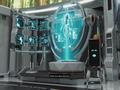
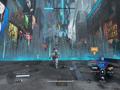
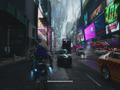
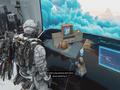
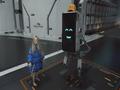
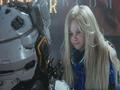
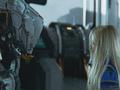
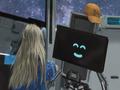
Overall, I think Pragmata is largely a cute story about a likable guy adopting a small android girl. It's a very predictable story in a lot of ways, but it's carried heavily by the fact that Hugh and Diana are really cute together. Despite some early grumbling about how he doesn't really like kids, Hugh is extremely quick to fall into his role as Diana's doting dad, and it helps the game feel charming. He's quick to explain things, generous with praise, and generally feels like an actual dad with a kid. Diana feels so much like an actual child that I'm positive the writers were basing it on their own children. She's cheerful, bright, positive and playful. If you're someone who gets easily annoyed by kids in video games, she might still be annoying to you, but by and large, I thought she was a nice kid.
My only complaint about the story is its predictability and relatively static nature. Diana and Hugh are adorable together, but there's very little buildup. Hugh is a good dad from start to finish, and there's no real sense of growth to their interactions. I don't mind avoiding the tired old "grumpy loner grows to love precocious child" trope, but it basically makes the plot feel like a lengthy day out that happens to feature a whole lot of robot murder. I liked the duo enough by the endgame that I'd gladly see more of their adventures together.
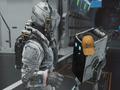
Hugh is a basic, by-the-numbers video game armor man. He's equipped with a useful mech suit that allows him to dash, jump and boost around the environment, and he has a basic "handgun" equivalent that has infinite ammo but needs to recharge over time. In true modern video game fashion, he can carry a limited number of healing items that are replenished every time you reach one of the game's rest points, which also causes enemies in the area to respawn. If you've played a modern game, you probably have a good idea of how Hugh plays. That's good because things get a lot more complex once Diana comes into play.
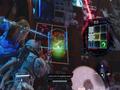
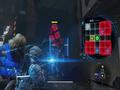
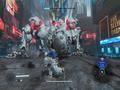
The most distinct element of combat in Pragmata is hacking. Hugh's basic combat skills are fine, but the unfortunate fact of the matter is that he's in the one game in the universe where heavily armored death robots shrug off small-arms fire. The only way to damage them is by having Diana hack them. This is done by aiming at them, which pulls up a small grid-based representation of their internal circuitry. To hack an enemy, Diana has to create a line from her starting point to a green Hack node, and that's done by moving (one grid space at a time) via the face buttons on the controller. This happens in real time as you're controlling Hugh, and taking damage causes Diana to drop the hack, unless you have a specific upgrade.
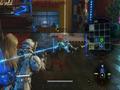
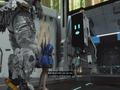
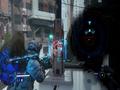
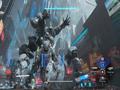
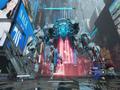
Hacking an enemy has several important effects. The first and most important is that it opens up an enemy. An open enemy has their vulnerable insides exposed, so Hugh can target them. It also causes a small amount of hacking damage to the enemy and builds up heat, which is a stun meter and can be built up by hacking or targeting enemy weak points. Fill it up and an enemy goes down, so Hugh can perform a critical shot melee attack. Think of it like stunning an enemy in Resident Evil.
A major element of hacking is that you don't just want to get from point A to point B. Each "hacking board" is filled with various nodes. Blue nodes amplify the effect of your hack. By default, when first hacking a robot, this means they remain open for longer the more nodes you pass through. After some upgrades, you'll unlock the ability to hack already-open enemies for more effects, including increasing damage and causing them to overheat. You eventually unlock the ability to force a "down" on a weakened enemy to allow you to perform a critical shot even if their heat isn't full.
Yellow nodes are special attacks. You have to collect them in the environment, and successfully passing through one and then triggering a hack uses it up in exchange for an effect. These effects can include causing the hack to give a reduced effect to everything nearby, causing an enemy to get confused and attack their allies, and letting you trigger multiple hacks at once.
There's a balancing factor in the game. You want to get as much impact out of a single hack as you can, but at the same time, you need to avoid damage for Hugh's health and to keep Diana from losing track. The more nodes you can hit, the bigger the impact, while rushed speedy hacks might be safer in the short term but give you fewer benefits.
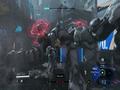
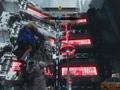
Thankfully, Pragmata gives you some options to avoid getting totally overwhelmed. Early on, Diana unlocks the Overdrive Protocol, a super mode that builds up as she hacks. Activating it stuns, opens, and damages all enemies nearby, making it a useful smart bomb in an emergency. The same hacking meter used for Overdrive can also be spent on an auto-hack, which causes Diana to automatically complete a hack at high speed, usually without triggering yellow nodes. Alternatively, it could be used to slow time and give you more time to manually hack. You can't use these nonstop, but they do give you more options when it comes to intense situations.
Diana's hacking grows more complex as the game progresses. With each new enemy, you'll get something new to focus on. Some enemies create barriers that prevent Diana from hacking unless Hugh destroys the antennas creating them. Some have massively oversized boards that take longer to hack. Some have danger zones that instantly fail a hack if you accidentally touch them, and more. Every enemy usually has some gimmick that you have to consider.
Pragmata's biggest barrier to entry is probably the patting-your-head-and-rubbing-your-stomach complexity of basic combat. To be fair, I do think it might be overwhelming. The game does a lot to make it as easy and accessible as possible, but having to constantly focus on dodging and hacking at the same time requires a lot of focus. It reminds me of something like The World Ends With You, where the split focus is a genuine design choice to force players to constantly juggle various mechanics, but at the end of the day, I really loved it, and I think it hit the mark.
Pragmata is also excellent about constantly introducing new enemies, new tools, new weapons and new gimmicks as the game progresses. You never go too long without running into something new that forces you to change how you confront enemies. For example, early on, you'll run into enemies who fire missiles at you. These missiles are powerful but can be hacked to return to their sender, encouraging you to balance between hacking the main bot and keeping the hacked missiles off your back. Another has a powerful shield that prevents you from hacking it directly and must be shot down before you can. A third turns invisible and likes to skulk around the edges of a fight, waiting for you to get close so it can grab you. The list goes on, and pretty much every enemy has something interesting going on that forces you to constantly consider what you're fighting.
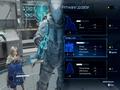
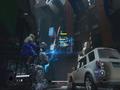
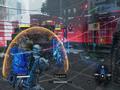
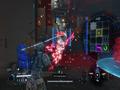
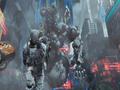
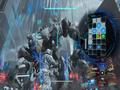
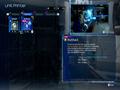
It helps that the weapons are also extremely cool. There's very little in the way of "standard" weapons in the game. Instead, weapons are divided into three types: attack, support and defense. You can carry one of each (later upgradable to two attack, two support and one defense), and each one serves a different purpose. Attack is big damage in distinct ways. The initial weapon is the shockwave gun, which serves as a high-damage shotgun. The next one is a charged-up piercing laser that does massive damage but requires a long loading time. There's a constant influx of new and useful tools throughout the game, including new ones unlocked once you've finished the game for the first time, which can be carried into a NG+ or harder difficulty mode.
Support and defense options are invaluable, despite not primarily dealing damage. Support weapons are designed to amplify your ability to hack or deal damage in a variety of ways. The Stasis Net temporarily freezes enemies, even bosses, who wander into it, giving you more time to pull off a hack or target weak points. The hacking mine creates a temporary field where any enemy who wanders into it gets the impact of the hack inflicted on them. The Impact Shield nullifies attacks around you for a short period of time, while the Decoy causes enemies to focus on a holographic Hugh.
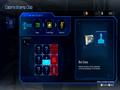
This also means that you have a ton of options when it comes to character builds. As the game progresses, you unlock the ability to upgrade various weapons so you can always start with a specific loadout of hacks, weapons and mods whenever you leave the shelter. You can also further customize what you want to focus on in combat. One upgrade allows you to swap the standard hack-to-open mechanic for an enhanced hack where dealing damage when the enemy is open will build up hacking damage. Hack again, and it will deal that damage in a single massive burst and also close the enemy. Another lets you increase the amount of heat you build up on enemies, letting you focus on dealing critical shots. If you're not fond of hacking, you can go for builds that minimize the amount of hacking needed, including skills that let you auto-hack more often or trigger an auto-hack every time you dodge an attack.
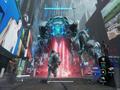
This did wonders for keeping Pragmata's gameplay fresh, and I was constantly experimenting with different weapons, tools and options. Every time I thought I'd settled into a comfortable niche, I found a new weapon, mod or upgrade that made me want to try something different. If I ever ran into trouble with an enemy, I usually found some kind of combo of skills that trivialized them. One particularly big and nasty foe proved to be quite vulnerable to being knocked over with riot grenades, and carefully chaining together moves prevented it from activating a second harder phase. It also meant I never felt particularly shoehorned into any one style of play. As long as you're considering both hacking and gunplay, you can find something that works for you.
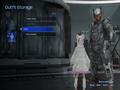
Thankfully, the game also includes a bunch of optional content to push yourself. Throughout the game, you'll get access to training missions that are entirely optional modes that give you specific combinations of weapons and skills and encourage you to complete optional objectives. Some of these are incredibly easy, and others encourage you to learn how to use every weapon and tool in your arsenal. It serves as a combination challenge mode and minor tutorial for some of the game's unique gimmicks. There's also a post-game with more optional challenges and an unlockable harder difficulty mode. There's even a bucketload of unlockable costumes and bonuses to find.
I found Pragmata to be one of the most enjoyable shooters I've played in a long time. It looks overwhelming and complex at first, but the end result is something that's basically nonstop fun, with fantastic pacing and an excellent variety of skills and abilities. I thought I'd get bored of hacking, but the game offers enough twists and turns that I never did. If anything, the constant juggling act kept me far more engaged — even when I was fighting enemies I'd already defeated many times before.

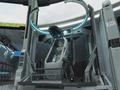


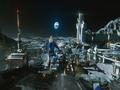

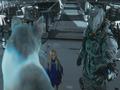
My only minor complaint is that the level design can be a touch awkward. Most of the stages are largely linear with a few branching offshoots. However, the design of the levels can make it difficult to tell what is and isn't accessible, and there are a few invisible walls that stopped me from getting into places that looked clearly accessible. This wasn't a problem while playing the game, but upon going back through to find all the collectibles, it took longer than I'd have liked to figure out if the zone I was looking for was accessible via a certain path, especially since a good chunk of collectibles are hidden behind these invisible walls.
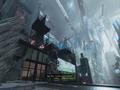
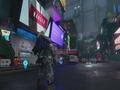
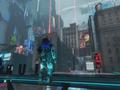
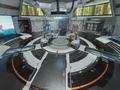
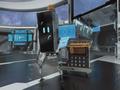
Pragmata is clearly a game designed for more powerful systems than the Switch 2, but thankfully, it generally scales down to the system. The game runs smoothly, only showing notable slowdown during some of the busiest areas, and rarely in a way that interrupts the gameplay. It looks quite good, with the biggest problem being some extremely blurry low-res textures, especially in handheld mode. It's a clear compromise for a handheld system, but it's a solid enough experience that I genuinely wasn't bothered by it. The art design is also very strong, with large chunks of the 3D printed station looking melted and distorted, an attempt (though hand-crafted) to mimic the idea of a gen-AI's melting incorrect artwork given physical form. The voice acting and audio are extremely good, and Diana and Hugh have some incredibly adorable chemistry together. Some of the dialogue reads feel a little awkward, but by and large, the game nailed what it needed to on the audio side to make this makeshift father and daughter combo work.
Pragmata was a genuine delight from start to finish. In some ways, it reminds me of the weird experimental games Capcom put out during the PS2 and GameCube era; it feels weird, fresh and experimental. It also largely nails everything it is trying to do, and I plowed through the game and went back for more. It's even an incredibly solid Switch 2 port. The only real barrier to enjoyment is if the disjointed hacking and gunplay grows too disorienting, but I think the gameplay is more than solid enough to overcome that.
Score: 9.0/10

More articles about Pragmata